
Jathagam Complete Guide - Part 1: 27 Nakshatras
ஜாதகம் முழு வழிகாட்டி - பாகம் 1: 27 நட்சத்திரங்கள்
Welcome to Part 1 of the comprehensive Jathagam (ஜாதகம்) guide based on Tamil and Kerala astrological methods. This series covers everything you need to know about Vedic Astrology for reading birth charts.
What is Jathagam? - ஜாதகம் என்றால் என்ன?
Definition and Etymology
Jathagam (ஜாதகம்) comes from Sanskrit Jātaka (जातक):
- जात (Jāta) = Born, birth
- जातक (Jātaka) = Related to birth, birth chart
Tamil/Malayalam Names:
- ஜாதகம் (Jāthagam) - Tamil
- ജാതകം (Jātakam) - Malayalam
- Also called குண்டலி (Kuṇḍali) or ராசி பலன் (Rāsi Palan)
What is it?
A Jathagam is a snapshot of the sky at the exact moment and place of your birth, showing:
- Position of 9 planets (Navagrahas)
- Position of Moon in one of 27 Nakshatras (stars)
- Ascendant (Lagna) - Rising sign
- 12 houses (Bhavas) representing different life areas
- Planetary periods (Dashas) throughout life
Tamil vs Kerala Jathagam Format
Key Differences:
| Aspect | Tamil Method | Kerala Method |
|---|---|---|
| Chart Style | Diamond/Square format | Square format (similar) |
| Rasi Order | Clockwise from any position | Fixed position system |
| Navamsa | Separate chart | Integrated display |
| Dasha Display | Vimshottari prominent | Vimshottari + Ashtottari |
| Calculation | Thirukanitha Panchangam | Vakya Panchangam (traditional) |
| Language | Tamil script | Malayalam script |
Both methods use:
- Same 27 Nakshatras
- Same 12 Rashis (Zodiac signs)
- Same 9 Planets (Navagrahas)
- Vimshottari Dasha system
This guide covers both Tamil and Kerala traditions and is applicable to all South Indian Jathagam readings.
The 27 Nakshatras - 27 நட்சத்திரங்கள்
What are Nakshatras?
Nakshatra (நட்சத்திரம்) means “star” or “lunar mansion.”
The zodiac (360°) is divided into 27 equal parts of 13°20’ each. Each Nakshatra represents:
- A specific segment of the sky
- A ruling deity
- A symbolic animal (Yoni)
- Specific characteristics and attributes
Your Nakshatra is determined by the Moon’s position at the time of your birth.
Importance in Jathagam:
- Determines your fundamental nature and personality
- Used for name selection (Nakshatra Akshar)
- Marriage compatibility (Porutham/Kuta)
- Timing of events (Muhurtham)
- Dasha periods calculation
Complete 27 Nakshatra Details
Below is the complete reference table for all 27 Nakshatras with:
- Tamil and Sanskrit names
- Animal symbol
- Yoni (symbol/energy)
- Rasi (Zodiac sign)
- Ruling deity
- Ruling planet
- Associated tree
- Associated bird
- Characteristics
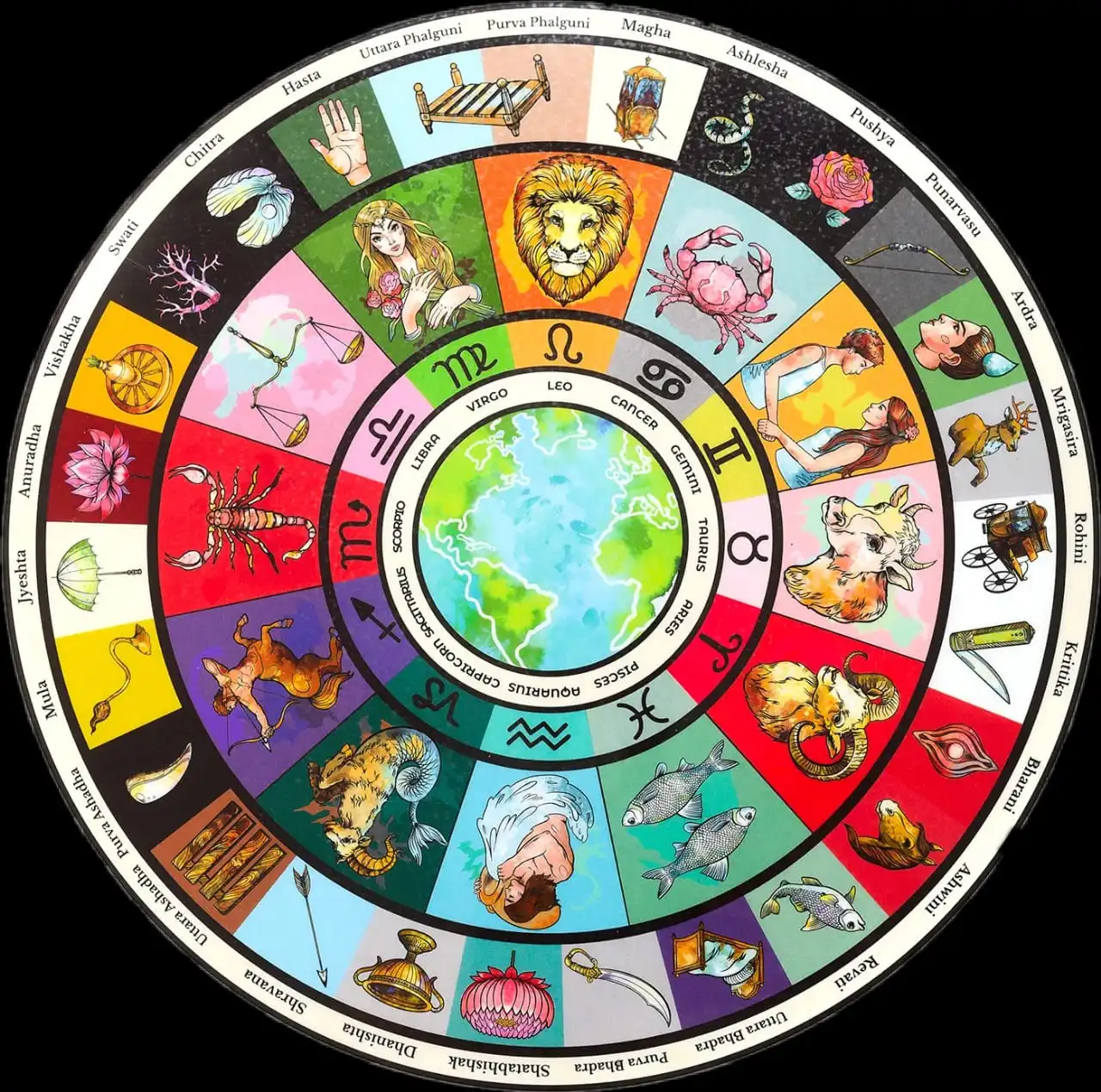
27 Nakshatras Complete Reference Table
Nakshatras 1-9: Ashwini to Ashlesha
| # | Nakshatra நட்சத்திரம் | Tamil தமிழ் | Animal விலங்கு | Yoni பால் | Rasi ராசி | Deity தெய்வம் | Planet கிரகம் | Tree மரம் | Bird பறவை |
|---|---|---|---|---|---|---|---|---|---|
| 1 | Ashwini अश्विनी | அஸ்வினி | Horse குதிரை | Male | Aries மேஷம் | Ashwini Kumaras அஸ்வினி குமாரர்கள் | Ketu கேது | Poison Nut Tree எட்டி மரம் / கஞ்சிறா | Wild Eagle ராஜாளி / கழுகு |
| 2 | Bharani भरणी | பரணி | Elephant யானை | Female | Aries மேஷம் | Yama யமன் | Venus சுக்கிரன் | Amla/Gooseberry நெல்லி | Crow காகம் |
| 3 | Krittika कृत्तिका | கிருத்திகை | Sheep ஆடு | Female | Aries/Taurus மேஷம்/ரிஷபம் | Agni அக்னி | Sun சூரியன் | Fig Tree அத்தி | Peacock மயில் |
| 4 | Rohini रोहिणी | ரோகிணி | Serpent பாம்பு | Male | Taurus ரிஷபம் | Brahma பிரம்மா | Moon சந்திரன் | Jamun/Rose Apple நாவல் | Owl ஆந்தை |
| 5 | Mrigashira मृगशिरा | மிருகசீரிடம் | Serpent பாம்பு | Female | Taurus/Gemini ரிஷபம்/மிதுனம் | Soma (Moon) சோமன் | Mars செவ்வாய் | Khadira/Acacia கருங்காலி / கருவேலம் | Hen கோழி |
| 6 | Ardra आर्द्रा | திருவாதிரை | Dog நாய் | Male | Gemini மிதுனம் | Rudra உருத்திரன் | Rahu ராகு | Long Pepper செங்கருங்காலி / திப்பிலி | Parrot அன்றில் / கிளி |
| 7 | Punarvasu पुनर्वसु | புனர்பூசம் | Cat பூனை | Female | Gemini/Cancer மிதுனம்/கடகம் | Aditi அதிதி | Jupiter குரு | Bamboo மூங்கில் | Swan/Goose அன்னம் |
| 8 | Pushya पुष्य | பூசம் | Goat ஆடு | Male | Cancer கடகம் | Brihaspati பிருஹஸ்பதி | Saturn சனி | Peepal/Sacred Fig அரசமரம் | Crow நீர்காகம் / காகம் |
| 9 | Ashlesha आश्लेषा | ஆயில்யம் | Cat பூனை | Male | Cancer கடகம் | Nagas (Serpents) நாகர்கள் | Mercury புதன் | Nagakesara புன்னை / நாகலிங்கம் | Vulture கிச்சிலி / கழுகு |
Nakshatras 10-18: Magha to Jyeshtha
| # | Nakshatra நட்சத்திரம் | Tamil தமிழ் | Animal விலங்கு | Yoni பால் | Rasi ராசி | Deity தெய்வம் | Planet கிரகம் | Tree மரம் | Bird பறவை |
|---|---|---|---|---|---|---|---|---|---|
| 10 | Magha मघा | மகம் | Rat எலி | Male | Leo சிம்மம் | Pitrs (Ancestors) பித்ரு தேவதைகள் | Ketu கேது | Banyan ஆலமரம் | Eagle ஆண்கழுகு |
| 11 | Purva Phalguni पूर्व फाल्गुनी | பூரம் | Rat எலி | Female | Leo சிம்மம் | Bhaga பகன் | Venus சுக்கிரன் | Flame of Forest புரசு(புரசை) / பலா / முருக்கை | Eagle பெண்கழுகு |
| 12 | Uttara Phalguni उत्तर फाल्गुनी | உத்திரம் | Bull எருது | Male | Leo/Virgo சிம்மம்/கன்னி | Aryaman அர்யமன் | Sun சூரியன் | Rose/Pongamia அலரி எனும் அரளி / புன்னை | Beetle கிளுவை / வண்டு |
| 13 | Hasta हस्त | அஸ்தம் | Buffalo எருமை | Female | Virgo கன்னி | Savitar சவிதா | Moon சந்திரன் | Wood Apple வேல / ஆத்தி / விளா | Vulture பருந்து |
| 14 | Chitra चित्रा | சித்திரை | Tiger புலி | Male | Virgo/Libra கன்னி/துலாம் | Tvashtar த்வஷ்டா | Mars செவ்வாய் | Sacred Fig/Vanni வில்வ / வன்னி | Woodpecker மரங்கொத்தி |
| 15 | Swati स्वाति | சுவாதி | Buffalo எருமை | Male | Libra துலாம் | Vayu வாயு | Rahu ராகு | Arjuna Tree மருதம் | Goose தேனீ / அன்னம் |
| 16 | Vishakha विशाखा | விசாகம் | Tiger புலி | Female | Libra/Scorpio துலாம்/விருச்சிகம் | Indra-Agni இந்திர-அக்னி | Jupiter குரு | Wood Apple விளாமரம் | Sparrow செங்குருவி / குருவி |
| 17 | Anuradha अनुराधा | அனுஷம் | Deer மான் | Female | Scorpio விருச்சிகம் | Mitra மித்திரன் | Saturn சனி | Indian Beech மகிழமரம் / பூவரசு | Nightingale வானம்பாடி / குயில் |
| 18 | Jyeshtha ज्येष्ठा | கேட்டை | Deer மான் | Male | Scorpio விருச்சிகம் | Indra இந்திரன் | Mercury புதன் | Shami/Prosopis பிராய் / வன்னி | Crow சக்கரவாகம் / காகம் |
Nakshatras 19-27: Moola to Revati
| # | Nakshatra நட்சத்திரம் | Tamil தமிழ் | Animal விலங்கு | Yoni பால் | Rasi ராசி | Deity தெய்வம் | Planet கிரகம் | Tree மரம் | Bird பறவை |
|---|---|---|---|---|---|---|---|---|---|
| 19 | Moola मूल | மூலம் | Dog நாய் | Female | Sagittarius தனுசு | Nirriti நிருதி | Ketu கேது | Sal/Anjan மராமரம் / சாலமரம் | Cock செம்பருந்து / சேவல் |
| 20 | Purva Ashadha पूर्व आषाढ़ा | பூராடம் | Monkey குரங்கு | Male | Sagittarius தனுசு | Apas (Water) ஆபஸ் | Venus சுக்கிரன் | Bamboo/Vetiver வஞ்சி / மூங்கில் | Francolin கௌதாரி / காடை |
| 21 | Uttara Ashadha उत्तर आषाढ़ा | உத்திராடம் | Mongoose கீரி | Female | Sagittarius/Capricorn தனுசு/மகரம் | Vishvadevas விஷ்வதேவர்கள் | Sun சூரியன் | Jackfruit பலாமரம் | Stork வலியான் / நாரை |
| 22 | Shravana श्रवण | திருவோணம் | Monkey குரங்கு | Female | Capricorn மகரம் | Vishnu விஷ்ணு | Moon சந்திரன் | Milk Hedge எருக்கு / கள்ளி | Cock நாரை / சேவல் |
| 23 | Dhanishtha धनिष्ठा | அவிட்டம் | Lioness சிங்கம் | Female | Capricorn/Aquarius மகரம்/கும்பம் | Eight Vasus எட்டு வசுக்கள் | Mars செவ்வாய் | Shami/Prosopis வன்னி | Lark பொன்வண்டு / வானம்பாடி |
| 24 | Shatabhisha शतभिषा | சதயம் | Horse குதிரை | Female | Aquarius கும்பம் | Varuna வருணன் | Rahu ராகு | Kadamba வெண்கடம்பு | Raven அண்டங்காக்கை / காகம் |
| 25 | Purva Bhadrapada पूर्व भाद्रपद | பூரட்டாதி | Lion சிங்கம் | Male | Aquarius/Pisces கும்பம்/மீனம் | Aja Ekapada அஜ ஏகபாதன் | Jupiter குரு | Neem தேற்றா / வேப்பமரம் | Skylark உள்ளான் / வானம்பாடி |
| 26 | Uttara Bhadrapada उत्तर भाद्रपद | உத்திரட்டாதி / உத்திரட்டாம் | Cow பசு | Female | Pisces மீனம் | Ahir Budhnya அஹிர்புத்னியன் | Saturn சனி | Neem வேப்பமரம் | Koyal/Cuckoo கோட்டான் / குயில் |
| 27 | Revati रेवती | ரேவதி | Elephant யானை | Female | Pisces மீனம் | Pushan பூஷன் | Mercury புதன் | Honey Tree/Neem இலுப்பை | Peacock வல்லூறு / மயில் |
Nakshatra-Rasi Mapping - நட்சத்திரம்-ராசி பொருத்தம்
Which Nakshatras Fall Under Which Rasi?
Each Rasi (Zodiac sign) spans 30° and contains 2¼ Nakshatras (since each Nakshatra is 13°20’).
| Rasi # | Rasi Name ராசி பெயர் | Tamil | Nakshatras (Padas) நட்சத்திரங்கள் | Full Nakshatras |
|---|---|---|---|---|
| 1 | Mesha (Aries) मेष | மேஷம் | Ashwini (all 4), Bharani (all 4), Krittika (pada 1) | Ashwini, Bharani |
| 2 | Vrishabha (Taurus) वृषभ | ரிஷபம் | Krittika (pada 2-4), Rohini (all 4), Mrigashira (pada 1-2) | Rohini |
| 3 | Mithuna (Gemini) मिथुन | மிதுனம் | Mrigashira (pada 3-4), Ardra (all 4), Punarvasu (pada 1-3) | Ardra |
| 4 | Karka (Cancer) कर्क | கடகம் | Punarvasu (pada 4), Pushya (all 4), Ashlesha (all 4) | Pushya, Ashlesha |
| 5 | Simha (Leo) सिंह | சிம்மம் | Magha (all 4), Purva Phalguni (all 4), Uttara Phalguni (pada 1) | Magha, Purva Phalguni |
| 6 | Kanya (Virgo) कन्या | கன்னி | Uttara Phalguni (pada 2-4), Hasta (all 4), Chitra (pada 1-2) | Hasta |
| 7 | Tula (Libra) तुला | துலாம் | Chitra (pada 3-4), Swati (all 4), Vishakha (pada 1-3) | Swati |
| 8 | Vrishchika (Scorpio) वृश्चिक | விருச்சிகம் | Vishakha (pada 4), Anuradha (all 4), Jyeshtha (all 4) | Anuradha, Jyeshtha |
| 9 | Dhanus (Sagittarius) धनुष | தனுசு | Moola (all 4), Purva Ashadha (all 4), Uttara Ashadha (pada 1) | Moola, Purva Ashadha |
| 10 | Makara (Capricorn) मकर | மகரம் | Uttara Ashadha (pada 2-4), Shravana (all 4), Dhanishtha (pada 1-2) | Shravana |
| 11 | Kumbha (Aquarius) कुंभ | கும்பம் | Dhanishtha (pada 3-4), Shatabhisha (all 4), Purva Bhadrapada (pada 1-3) | Shatabhisha |
| 12 | Meena (Pisces) मीन | மீனம் | Purva Bhadrapada (pada 4), Uttara Bhadrapada (all 4), Revati (all 4) | Uttara Bhadrapada, Revati |
Note: Each Nakshatra has 4 padas (quarters) of 3°20’ each.
Nakshatra Characteristics - நட்சத்திர குணங்கள்
Guna, Gana, and Nadi Classification
Each Nakshatra is classified by:
1. Guna (Quality) - குணம்
| Guna | Nakshatras | Characteristics |
|---|---|---|
| Sattva (सत्त्व) சத்துவம் | Rohini, Mrigashira, Punarvasu, Pushya, Hasta, Swati, Anuradha, Shravana, Revati | Pure, spiritual, balanced, harmonious |
| Rajas (रजस्) ரஜஸ் | Ashwini, Krittika, Magha, Purva Phalguni, Purva Ashadha, Purva Bhadrapada | Active, passionate, ambitious, materialistic |
| Tamas (तमस्) தமஸ் | Bharani, Ardra, Ashlesha, Uttara Phalguni, Chitra, Vishakha, Jyeshtha, Moola, Uttara Ashadha, Dhanishtha, Shatabhisha, Uttara Bhadrapada | Inert, lazy, ignorant, materialistic |
2. Gana (Temperament) - கணம்
| Gana | Nakshatras | Temperament |
|---|---|---|
| Deva (Divine) தேவ கணம் | Ashwini, Mrigashira, Punarvasu, Pushya, Hasta, Swati, Anuradha, Shravana, Revati | Godly, righteous, virtuous, refined |
| Manushya (Human) மனுஷ்ய கணம் | Bharani, Rohini, Ardra, Purva Phalguni, Uttara Phalguni, Purva Ashadha, Uttara Ashadha, Purva Bhadrapada, Uttara Bhadrapada | Human-like, balanced, mixed qualities |
| Rakshasa (Demon) ராட்சஸ கணம் | Krittika, Ashlesha, Magha, Chitra, Vishakha, Jyeshtha, Moola, Dhanishtha, Shatabhisha | Fierce, aggressive, materialistic, passionate |
3. Nadi (Pulse/Energy) - நாடி
| Nadi | Nakshatras | Energy Type |
|---|---|---|
| Vata (वात) வாத நாடி | Ashwini, Ardra, Punarvasu, Uttara Phalguni, Hasta, Jyeshtha, Moola, Shatabhisha, Purva Bhadrapada | Air element - Quick, changeable, nervous |
| Pitta (पित्त) பித்த நாடி | Bharani, Mrigashira, Pushya, Purva Phalguni, Chitra, Anuradha, Purva Ashadha, Dhanishtha, Uttara Bhadrapada | Fire element - Hot, active, ambitious |
| Kapha (कफ) கப நாடி | Krittika, Rohini, Ashlesha, Magha, Swati, Vishakha, Uttara Ashadha, Shravana, Revati | Water element - Calm, stable, grounded |
Yoni (Animal Symbol) - யோனி விலங்கு
14 Yoni Pairs for Marriage Compatibility
Yoni represents the sexual and temperamental compatibility. There are 14 Yoni pairs (male and female):
| Yoni Animal விலங்கு | Male Nakshatra ஆண் நட்சத்திரம் | Female Nakshatra பெண் நட்சத்திரம் | Compatibility |
|---|---|---|---|
| Horse (குதிரை) | Ashwini | Shatabhisha | Excellent - Same Yoni |
| Elephant (யானை) | Bharani | Revati | Excellent - Same Yoni |
| Sheep (ஆடு) | Krittika | Pushya | Excellent - Same Yoni |
| Serpent (பாம்பு) | Rohini | Mrigashira | Excellent - Same Yoni |
| Dog (நாய்) | Ardra | Moola | Good - Same species |
| Cat (பூனை) | Punarvasu | Ashlesha | Moderate - Can be neutral |
| Rat (எலி) | Magha | Purva Phalguni | Excellent - Same Yoni |
| Cow (பசு) | Uttara Phalguni | Uttara Bhadrapada | Excellent - Same Yoni |
| Buffalo (எருமை) | Hasta | Swati | Excellent - Same Yoni |
| Tiger (புலி) | Chitra | Vishakha | Excellent - Same Yoni |
| Hare (முயல்) / Deer(மான்) | Anuradha | Jyeshtha | Excellent - Same Yoni |
| Monkey (குரங்கு) | Purva Ashadha | Shravana | Good - Same species |
| Mongoose (கீரி) | Uttara Ashadha | - | Neutral |
| Lion (சிங்கம்) | Dhanishtha | Purva Bhadrapada | Good - Same species |
Why Only 14 Yoni Pairs? Why is Mongoose Alone?
The Mongoose (கீரி/Nakula) is unique among the 27 Nakshatras:
1. Solitary Nature:
- The mongoose is a solitary animal in Vedic tradition
- Unlike other animals that have male-female pairs, the mongoose represents independence
- Symbolizes self-sufficient, lone warrior characteristics
2. Mythological Significance:
- In Mahabharata, a mongoose appeared after the great Kurukshetra war
- It rolled in the soil where drops of charity/yajna offerings fell
- Half its body turned golden (where true charity touched), half remained normal
- Represents discernment, testing truth vs falsehood
3. Astrological Interpretation:
- Uttara Ashadha ruled by Vishvadevas (Universal Gods)
- This Nakshatra represents universal victory, final achievement
- People born in Uttara Ashadha are:
- Self-reliant, independent
- Natural leaders who don’t need “pairing”
- Can stand alone successfully
- Victory-oriented, determined
4. Marriage Compatibility Impact:
- Uttara Ashadha natives are compatible with most Nakshatras
- Since they’re neutral, they don’t have specific enemies
- However, they score moderate (not excellent) in Yoni Porutham
- This is compensated by checking other Poruthams
5. Natural Enemy:
- Serpent vs Mongoose is the classic enemy pair
- Mongoose (Uttara Ashadha) vs Serpent (Rohini/Mrigashira) = Poor match
- But even here, the mongoose’s independence means it can “manage” the incompatibility better than paired animals
Special Note:
- Some ancient texts mention Nakula (नकुल) as both mongoose and certain types of weasel/civet
- The name Nakula also refers to one of the Pandava twins (son of Ashwini Kumaras)
- This further emphasizes the unique, special status of this yoni
Marriage Advice for Uttara Ashadha Natives:
- Focus on Gana, Rasi, and Rajju Porutham more than Yoni
- Their independent nature makes them adaptable partners
- Yoni score may be neutral, but overall compatibility can still be excellent
Yoni Matching Rules:
- Same Yoni = Excellent (5 points)
- Friendly animals = Good (3-4 points)
- Neutral animals = Moderate (2 points)
- Enemy animals = Poor (0-1 points)
Enemy Yonis:
- Cat vs Rat
- Dog vs Cat
- Tiger vs Cow/Buffalo
- Serpent vs Mongoose
God to Worship for Each Nakshatra - நட்சத்திரம் தெய்வங்கள்
Presiding Deities for Worship
Each Nakshatra has a specific deity to worship for blessings and removing afflictions:
| நட்சத்திரம் (Nakshatra) | விலங்கு (Animal) | God to Worship வழிபட வேண்டிய தெய்வம் |
|---|---|---|
| அஸ்வினி (Ashwini) | ஆண் குதிரை (Male Horse) | ஸ்ரீ சரஸ்வதி தேவி (Goddess Saraswati) |
| பரணி (Bharani) | பெண் யானை (Female Elephant) | ஸ்ரீ துர்கா தேவி (Goddess Durga) |
| கிருத்திகை (Krittika) | பெண் ஆடு (Female Sheep) | முருகப் பெருமான் (Lord Murugan/Kartikeya) |
| ரோகிணி (Rohini) | ஆண் பாம்பு (Male Serpent) | ஸ்ரீ கிருஷ்ணன் / விஷ்ணு பெருமான் (Lord Krishna/Vishnu) |
| மிருகசீரிடம் (Mrigashira) | பெண் பாம்பு (Female Serpent) | ஸ்ரீ சந்திர சூடேஸ்வர் / சிவபெருமான் (Lord Shiva as Chandramouleeshwara) |
| திருவாதிரை (Ardra) | ஆண் நாய் (Male Dog) | ஸ்ரீ சிவபெருமான் (Lord Shiva as Rudra) |
| புனர்பூசம் (Punarvasu) | பெண் பூனை (Female Cat) | ஸ்ரீ ராமர் / விஷ்ணு பெருமான் (Lord Rama/Vishnu) |
| பூசம் (Pushya) | ஆண் ஆடு (Male Goat) | ஸ்ரீ தட்சிணாமூர்த்தி / சிவபெருமான் (Lord Dakshinamurthy/Shiva) |
| ஆயில்யம் (Ashlesha) | ஆண் பூனை (Male Cat) | ஸ்ரீ ஆதிசேசன் / நாகம்மாள் (Lord Adisesha/Serpent Deities) |
| மகம் (Magha) | ஆண் எலி (Male Rat) | ஸ்ரீ சூரிய பகவான் / சூரிய நாராயணர் (Lord Surya/Sun God) |
| பூரம் (Purva Phalguni) | பெண் எலி (Female Rat) | ஸ்ரீ ஆண்டாள் தேவி (Goddess Andal) |
| உத்திரம் (Uttara Phalguni) | ஆண் எருது (Male Bull) | ஸ்ரீ மகாலட்சுமி தேவி (Goddess Mahalakshmi) |
| அஸ்தம் (Hasta) | பெண் எருமை (Female Buffalo) | ஸ்ரீ காயத்ரி தேவி (Goddess Gayatri) |
| சித்திரை (Chitra) | ஆண் புலி (Male Tiger) | ஸ்ரீ சக்கரத்தாழ்வார் / விஸ்வகர்மா (Vishwakarma/Divine Architect) |
| சுவாதி (Swati) | ஆண் எருமை (Male Buffalo) | ஸ்ரீ நரசிம்மமூர்த்தி (Lord Narasimha) |
| விசாகம் (Vishakha) | பெண் புலி (Female Tiger) | ஸ்ரீ முருகப் பெருமான் (Lord Murugan/Kartikeya) |
| அனுஷம் (Anuradha) | பெண் மான் (Female Deer) | ஸ்ரீ லட்சுமி நாராயணர் (Lord Lakshmi-Narayana) |
| கேட்டை (Jyeshtha) | ஆண் மான் (Male Deer) | ஸ்ரீ வராஹ பெருமாள் / ஹயக்கிரீவர் (Lord Varaha/Hayagriva) |
| மூலம் (Moola) | பெண் நாய் (Female Dog) | ஸ்ரீ ஆஞ்சநேயர் (Lord Hanuman) |
| பூராடம் (Purva Ashadha) | ஆண் குரங்கு (Male Monkey) | ஸ்ரீ ஜம்புகேஸ்வரர் / சிவபெருமான் (Lord Jambukeswara/Shiva) |
| உத்திராடம் (Uttara Ashadha) | கீரி (Mongoose) | ஸ்ரீ விநாயகப் பெருமான் (Lord Ganesha) |
| திருவோணம் (Shravana) | பெண் குரங்கு (Female Monkey) | ஸ்ரீ ஹயக்கிரீவர் / விஷ்ணுப் பெருமான் (Lord Hayagriva/Vishnu) |
| அவிட்டம் (Dhanishtha) | பெண் சிங்கம் (Female Lion) | ஸ்ரீ அனந்த சயனப் பெருமாள் (Lord Ananta Padmanabha) |
| சதயம் (Shatabhisha) | பெண் குதிரை (Female Horse) | ஸ்ரீ மிருத்யுஞ்ஜேஸ்வரர் / சிவபெருமான் (Lord Mrityunjaya/Shiva) |
| பூரட்டாதி (Purva Bhadrapada) | ஆண் சிங்கம் (Male Lion) | ஸ்ரீ ஏகபாதர் / சிவபெருமான் (Lord Ekapada/Shiva) |
| உத்திரட்டாதி (Uttara Bhadrapada) | பெண் பசு (Female Cow) | ஸ்ரீ மகாதேவர் / சிவபெருமான் (Lord Mahadeva/Shiva) |
| ரேவதி (Revati) | பெண் யானை (Female Elephant) | ஸ்ரீ அரங்கநாதன் / விஷ்ணு பெருமான் (Lord Ranganatha/Vishnu) |
How to Worship:
- Visit the respective deity’s temple on your Nakshatra day
- Perform Archana with your Nakshatra name
- Light lamps and offer flowers
- Chant the deity’s mantras 108 times
- Especially beneficial during your birth Nakshatra or on special occasions
Gayatri Mantras for 27 Nakshatras - நட்சத்திர காயத்ரி மந்திரங்கள்
Powerful Mantras for Each Nakshatra
Each Nakshatra has a specific Gayatri Mantra for its presiding deity. Chanting these mantras brings prosperity, removes afflictions, and invokes divine blessings.
Note: The words Vidmahe (வித்மஹே), Dhimahi (தீமஹி), Tanno (தன்னோ), and Prachodayat (ப்ரசோதயாத்) are standard Gayatri framework words meaning: “We meditate upon,” “May we contemplate,” “May that [deity],” and “Inspire/guide us.” Only deity-specific word meanings are provided below.
1. Ashwini (அஸ்வினி) - Saraswati Devi (சரஸ்வதி தேவி)
Word Meanings:
- Vāgdevyai (वाग्देव्यै) = To the Goddess of Speech (Vāk = speech, Devī = goddess)
- Brahmapatnyai (ब्रह्मपत्न्यै) = To the consort of Brahma (Brahma = Creator God, Patnī = wife)
- Vāṇī (वाणी) = Goddess of speech and learning (another name for Saraswati)
2. Bharani (பரணி) - Durga Devi (துர்கா தேவி) - Eight-Armed
Word Meanings:
- Kātyāyanāya (कात्यायनाय) = To Katyayani (form of Durga, daughter of sage Katyayana)
- Kanyākumāri (कन्याकुमारि) = The virgin maiden, eternal virgin goddess
- Durgā (दुर्गा) = The invincible one, destroyer of demons (Dur = difficult, Gā = to go beyond)
3. Krittika (கிருத்திகை) & Vishakha (விசாகம்) - Murugan (முருகப்பெருமான்)
Mantra 1:
Word Meanings:
- Tat Puruṣāya (तत् पुरुषाय) = To that Supreme Being/Cosmic Person
- Maheśvara Putrāya (महेश्वर पुत्राय) = To the son of the Great Lord (Maheśvara = Shiva, Putra = son)
- Subrahmaṇya (सुब्रह्मण्य) = The auspicious Brahmin/Spiritual Teacher (Su = good/auspicious, Brahmaṇya = divine wisdom)
Mantra 2:
Word Meanings:
- Mahā Senāya (महा सेनाय) = To the Great Commander of divine armies (Mahā = great, Senā = army)
- Ṣaṇmukhaḥ (षण्मुखः) = The six-faced one (Ṣaṭ = six, Mukha = face)
4. Rohini (ரோகிணி) - Krishna (கிருஷ்ணன்)
Word Meanings:
- Devakī Nandanāya (देवकी नन्दनाय) = To the son of Devaki (Nandana = son, delighter)
- Vāsu Devāya (वासु देवाय) = To Vasudeva, son of Vasudeva (Vāsu = dwelling everywhere, radiating)
- Kṛṣṇa (कृष्ण) = The dark/blue-complexioned one, the all-attractive one
5. Mrigashira (மிருகசீரிஷம்), Ardra (திருவாதிரை) - Shiva (சிவபெருமான்)
Shatabhisha (சதயம்) - Mrityunjaya (மிருத்யுஞ்ஜேஸ்வரர்)
Purva Bhadrapada (பூரட்டாதி) - Ekapada (ஏகபாதர்)
Uttara Bhadrapada (உத்திரட்டாதி) - Maheswara (மகேஸ்வரர்)
Mantra 1:
Word Meanings:
- Tatpuruṣāya (तत्पुरुषाय) = To that Supreme Being
- Mahādevāya (महादेवाय) = To the Great God (Mahā = great, Deva = god)
- Rudraḥ (रुद्रः) = The Howler, destroyer of sorrows (Rud = to cry/roar)
Mantra 2:
Word Meanings:
- Sadāśivāya (सदाशिवाय) = To the Eternal Auspicious One (Sadā = always, Śiva = auspicious)
- Jaṭādharāya (जटाधराय) = To the one who bears matted locks (Jaṭā = matted hair, Dhara = bearer)
Mantra 3:
Word Meanings:
- Pañcavaktrāya (पञ्चवक्त्राय) = To the five-faced one (Pañca = five, Vaktra = face)
- Atiśuddhāya (अतिशुद्धाय) = To the supremely pure one (Ati = very/supreme, Śuddha = pure)
Mantra 4:
Word Meanings:
- Gaurīnāthāya (गौरीनाथाय) = To the Lord of Gauri/Parvati (Gaurī = fair one/Parvati, Nātha = lord/master)
- Śivaḥ (शिवः) = The Auspicious One
Mantra 5:
Word Meanings:
- Śivottamāya (शिवोत्तमाय) = To the Supreme Shiva (Śiva + Uttama = highest/supreme)
- Mahottamāya (महोत्तमाय) = To the supremely great one (Mahā + Uttama = greatest)
Mantra 6:
Word Meanings:
- Tanmaheśāya (तन्महेशाय) = To that Great Lord (Tat + Mahā + Īśa = that supreme lord)
- Vākvicittāya (वाक्विचित्ताय) = To the one beyond speech and thought (Vāk = speech, Vicitta = beyond thought/wondrous)
Mantra 7:
Word Meanings:
- Rudramūrtaye (रुद्रमूर्तये) = To the one in the form of Rudra (Rudra + Mūrti = form/embodiment)
Mantra 8:
Word Meanings:
- Bhasmāyudhāya (भस्मायुधाय) = To the one whose weapon is sacred ash (Bhasma = sacred ash, Āyudha = weapon)
- Tīkṣṇadaṃṣṭrāya (तीक्ष्णदंष्ट्राय) = To the one with sharp teeth/tusks (Tīkṣṇa = sharp, Daṃṣṭra = teeth/tusks)
Mantra 9:
Word Meanings:
- Śūlahastāya (शूलहस्ताय) = To the one who holds the trident (Śūla = trident, Hasta = hand)
- Īśaḥ (ईशः) = The Supreme Lord, Controller
6. Punarvasu (புனர்பூசம்) - Rama (ராமர்)
Word Meanings:
- Dāśarathāya (दाशरथाय) = To the son of Dasharatha (Daśaratha’s son)
- Sītā Vallabhāya (सीता वल्लभाय) = To the beloved of Sita (Vallabha = beloved, husband)
- Rāmaḥ (रामः) = The pleasing one, the embodiment of dharma
7. Pushya (பூசம்) - Dakshinamurthy (தட்சிணாமூர்த்தி)
Mantra 1:
Word Meanings:
- Dakṣiṇāmūrtaye (दक्षिणामूर्तये) = To the south-facing form (Dakṣiṇa = south, Mūrti = form) - Shiva as the supreme teacher
- Dhyānasthāya (ध्यानस्थाय) = To the one established in meditation (Dhyāna = meditation, Stha = established)
- Dhīśaḥ (धीशः) = Lord of intellect/wisdom (Dhī = intellect, Īśa = lord)
Mantra 2:
Word Meanings:
- Jñānamudrāya (ज्ञानमुद्राय) = To the one showing the gesture of knowledge (Jñāna = knowledge, Mudrā = hand gesture)
- Tattvabodhāya (तत्त्वबोधाय) = To the teacher of ultimate truth (Tattva = truth/essence, Bodha = teaching/enlightenment)
- Devaḥ (देवः) = The radiant/divine one
Mantra 3:
Word Meanings:
- Ṛṣabhadhvajāya (ऋषभध्वजाय) = To the one whose flag bears the bull (Ṛṣabha = bull, Dhvaja = flag)
- Kṛṇihastāya (कृणिहस्ताय) = To the one holding a gesture/mudra in the hand
- Guruḥ (गुरुः) = The supreme teacher (Gu = darkness, Ru = remover)
8. Ashlesha (ஆயில்யம்) - Adisesha (ஆதிசேஷன்)
Word Meanings:
- Sahasra Śīrṣāya (सहस्र शीर्षाय) = To the thousand-headed one (Sahasra = thousand, Śīrṣa = head)
- Viṣṇu Talpāya (विष्णु तल्पाय) = To the couch/bed of Vishnu (Talpa = bed/couch)
- Ādiśeṣa (आदिशेष) = The primordial serpent (Ādi = first/primordial, Śeṣa = remainder/eternal)
9. Magha (மகம்) - Surya Bhagavan (சூரிய பகவான்)
Mantra 1:
Word Meanings:
- Aśvadhvajāya (अश्वध्वजाय) = To the one whose flag bears a horse (Aśva = horse, Dhvaja = flag)
- Pāśahastāya (पाशहस्ताय) = To the one holding a rope/noose (Pāśa = rope/noose, Hasta = hand)
- Sūryaḥ (सूर्यः) = The Sun God, illuminator
Mantra 2:
Word Meanings:
- Bhāskarāya (भास्कराय) = To the light-maker, radiant one (Bhās = light, Kara = maker)
- Divākarāya (दिवाकराय) = To the maker of day (Diva = day, Kara = maker)
10. Purva Phalguni (பூரம்) - Andal Devi (ஆண்டாள்)
Word Meanings:
- Tulasī Toṭṭa Jananyai (तुलसी तोट्ट जनन्यै) = To the one born in the Tulasi garden (Tulasī = holy basil, Toṭṭa = garden, Jananyai = born/mother)
- Viṣṇu Priya (विष्णु प्रिय) = Beloved of Vishnu (Priya = beloved)
- Śrī Raṅganotriṇāya (श्री रङ्गनोत्रिणाय) = To the one united with Sri Ranganatha
- Godā (गोदा) = Another name for Andal (Go = earth/cow, Dā = giver)
11. Uttara Phalguni (உத்திரம்) - Mahalakshmi (மகாலட்சுமி)
Mantra 1:
Word Meanings:
- Bhūm Śaktyai (भूम् शक्त्यै) = To the Earth power/energy (Bhū = earth, Śakti = divine feminine power)
- Viṣṇu Patnī (विष्णु पत्नी) = Consort of Vishnu (Patnī = wife)
- Lakṣmī (लक्ष्मी) = Goddess of wealth and prosperity (Lakṣa = goal/mark/auspiciousness)
Mantra 2:
Word Meanings:
- Amṛta Vāsinī (अमृत वासिनी) = To the one dwelling in nectar/immortality (Amṛta = nectar/immortal, Vāsinī = dwelling)
- Padma Locanī (पद्म लोचनी) = To the lotus-eyed one (Padma = lotus, Locanī = eyes)
Mantra 3:
Word Meanings:
- Mahādevyai (महादेव्यै) = To the Great Goddess (Mahā = great, Devī = goddess)
- Viṣṇu Bandhāya (विष्णु बन्धाय) = To the one bound/united with Vishnu (Bandha = bond/relation)
Mantra 4:
Word Meanings:
- Dhana Dhānyai (धन धान्यै) = To the one of wealth and grains (Dhana = wealth, Dhānya = grains)
- Śrī Mrādipriyāyai (श्री म्रादिप्रियायै) = To the beloved of Sri (prosperity)
- Hrīm (ह्रीम्) = Bija mantra for Lakshmi (seed sound)
- Svāhā (स्वाहा) = Offering salutation
Mantra 5 (Same as Mantra 2)
12. Hasta (அஸ்தம்) - Gayatri Devi (காயத்திரி தேவி)
Word Meanings:
- Bhūr (भूर्) = Earth realm, physical plane
- Bhuvaḥ (भुवः) = Atmosphere, astral plane
- Svaḥ (स्वः) = Heaven, celestial realm
- Tat Savitur (तत्सवितुर्) = That divine Sun (Savitṛ = Sun God, generator)
- Vareṇyam (वरेण्यम्) = Most worthy, adorable (Vareṇya = most excellent)
- Bhargo (भर्गो) = Effulgence, divine light (Bhar = to shine)
- Devasya (देवस्य) = Of the radiant one/deity
- Dhiyo (धियो) = Intellect, understanding (Dhī = intellect)
- Yo Naḥ (यो नः) = Who our, which our
13. Chitra (சித்திரை) - Sudarshana Chakra (சக்கரத்தாழ்வார்)
Word Meanings:
- Sudarśanāya (सुदर्शनाय) = To the auspicious vision/discus (Su = good, Darśana = vision/sight)
- Jvālā Cakrāya (ज्वाला चक्राय) = To the flaming discus (Jvālā = flame, Cakra = discus/wheel)
- Cakra (चक्र) = Discus weapon of Vishnu
14. Swati (சுவாதி) - Narasimha (நரசிம்மமூர்த்தி)
Mantra 1:
Word Meanings:
- Vajra Nakhāya (वज्र नखाय) = To the one with diamond/thunderbolt nails (Vajra = diamond/thunderbolt, Nakha = nails/claws)
- Tīṣṇa Daṃṣṭrāya (तीष्ण दंष्ट्राय) = To the one with sharp tusks (Tīṣṇa = sharp, Daṃṣṭra = tusks)
- Narasiṃha (नरसिंह) = Man-lion incarnation (Nara = man, Siṃha = lion)
Mantra 2:
Word Meanings:
- Siṃha (सिंह) = Lion
15. Anuradha (அனுஷம்) - Lakshmi Narayana (லட்சுமி நாராயணர்)
Word Meanings:
- Śrīdevya ca Nārāyaṇāya (श्रीदेव्य च नारायणाय) = To Lakshmi and Narayana together (Śrīdevī = Lakshmi, Nārāyaṇa = Vishnu)
- Śānta Mūrtyāya (शान्त मूर्तयाय) = To the peaceful form (Śānta = peaceful, Mūrti = form)
- Lakṣmī Nārāyaṇa (लक्ष्मी नारायण) = Divine couple - Lakshmi and Narayana
16. Jyeshtha (கேட்டை) - Varaha (வராஹ பெருமாள்)
Mantra 1:
Word Meanings:
- Dhanurdharāya (धनुर्धराय) = To the bow-bearer (Dhanur = bow, Dhara = bearer)
- Vakra Daṃṣṭrāya (वक्र दंष्ट्राय) = To the one with curved tusks (Vakra = curved, Daṃṣṭra = tusks)
- Varāhaḥ (वराहः) = Boar incarnation (divine boar)
Mantra 2:
Word Meanings:
- Nārāyaṇāya (नारायणाय) = To Narayana/Vishnu (Nāra = waters/beings, Ayaṇa = resting place/goal)
- Bhūmipālāya (भूमिपालाय) = To the protector of Earth (Bhūmi = earth, Pāla = protector)
17. Moola (மூலம்) - Hanuman (ஆஞ்சநேயர்)
Word Meanings:
- Āñjaneyāya (आञ्जनेयाय) = To the son of Anjana (Añjanā = mother’s name)
- Vāyuputrāya (वायुपुत्राय) = To the son of Wind God (Vāyu = wind god, Putra = son)
- Hanuman (हनुमन्) = The one with prominent jaw (Hanu = jaw)
18. Purva Ashadha (பூராடம்) - Jambukeshwara (ஜம்புகேஸ்வரர்)
Word Meanings:
- Jambukeśvara (जम्बुकेश्वर) = Lord of Jambu tree (Jambu = rose apple tree, Īśvara = lord) - Shiva worshipped at Thiruvanaikaval
19. Uttara Ashadha (உத்திராடம்) - Ganesha (விநாயகப் பெருமான்)
Word Meanings:
- Vakra Tuṇḍāya (वक्र तुण्डाय) = To the one with curved trunk (Vakra = curved, Tuṇḍa = trunk/snout)
- Danti (दन्ति) = The one with tusks (Danta = tooth/tusk)
20. Shravana (திருவோணம்) - Hayagriva (ஹயக்ரீவர்)
Word Meanings:
- Vaniṣṭhavarāya (वनिष्ठवराय) = To the most eloquent/best speaker (Vaniṣṭha = most eloquent)
- Hayagrīvāya (हयग्रीवाय) = To the horse-necked one (Haya = horse, Grīva = neck)
- Hayagrīvaḥ (हयग्रीवः) = Horse-headed incarnation of Vishnu, lord of knowledge
21. Dhanishtha (அவிட்டம்) & Revati (ரேவதி) - Ananta Padmanabha (அனந்த சயனப் பெருமாள்) & Ranganatha (அரங்கநாதன்)
Word Meanings:
- Nirañjanāya (निरञ्जनाय) = To the spotless/pure one (Nir = without, Añjana = collyrium/blemish)
- Nirābhāsāya (निराभासाय) = To the one without illusion (Nir = without, Ābhāsa = appearance/illusion)
- Śrīnivāsa (श्रीनिवास) = Abode of Lakshmi (Śrī = Lakshmi, Nivāsa = dwelling place) - name for Vishnu
How to Chant Nakshatra Gayatri Mantras
Best Times:
- Morning after bath (Brahma Muhurtham or sunrise)
- On your Nakshatra day (when Moon transits your birth star)
- Thursdays (auspicious for all mantras)
- Full Moon & New Moon days
Method:
- Sit facing East or North
- Light a lamp and incense
- Chant 108 times using a mala (prayer beads)
- Offer flowers to the deity
- Conclude with prostration and prayer
Benefits:
- Removes Nakshatra-related doshas
- Brings the deity’s blessings
- Enhances positive qualities of your Nakshatra
- Protection from malefic planetary influences
- Spiritual growth and material prosperity
Nakshatra Akshar - Name Letters (நட்சத்திர எழுத்துகள்)
Starting Syllables for Each Nakshatra Pada
In Tamil/South Indian tradition, babies are named based on the Nakshatra Akshar (starting syllable) of their birth star.
| Nakshatra | Pada 1 | Pada 2 | Pada 3 | Pada 4 |
|---|---|---|---|---|
| Ashwini | சூ (Chu) | சே (Che) | சோ (Cho) | லா (La) |
| Bharani | லீ (Li) | லூ (Lu) | லே (Le) | லோ (Lo) |
| Krittika | அ (A) | ஈ (I) | உ (U) | ஏ (E) |
| Rohini | ஓ (O) | வா (Va) | வீ (Vi) | வூ (Vu) |
| Mrigashira | வே (Ve) | வோ (Vo) | கா (Ka) | கீ (Ki) |
| Ardra | கூ (Ku) | கம் (Kam) | ஜா (Ja) | ஞா (Gna) |
| Punarvasu | கே (Ke) | கோ (Ko) | ஹா (Ha) | ஹீ (Hi) |
| Pushya | ஹூ (Hu) | ஹே (He) | ஹோ (Ho) | டா (Da) |
| Ashlesha | டீ (Di) | டூ (Du) | டே (De) | டோ (Do) |
| Magha | மா (Ma) | மீ (Mi) | மூ (Mu) | மே (Me) |
| Purva Phalguni | மோ (Mo) | டா (Ta) | டீ (Ti) | டூ (Tu) |
| Uttara Phalguni | டே (Te) | டோ (To) | பா (Pa) | பீ (Pi) |
| Hasta | பூ (Pu) | ஷா (Sha) | ணா (Na) | பா (Tha) |
| Chitra | பே (Pe) | போ (Po) | ரா (Ra) | ரீ (Ri) |
| Swati | ரூ (Ru) | ரே (Re) | ரோ (Ro) | தா (Ta) |
| Vishakha | தீ (Ti) | தூ (Tu) | தே (Te) | தோ (To) |
| Anuradha | நா (Na) | நீ (Ni) | நூ (Nu) | நே (Ne) |
| Jyeshtha | நோ (No) | யா (Ya) | யீ (Yi) | யூ (Yu) |
| Moola | யே (Ye) | யோ (Yo) | பா (Bha) | பீ (Bhi) |
| Purva Ashadha | பூ (Bhu) | தா (Dha) | பா (Pha) | டா (Dha) |
| Uttara Ashadha | பே (Be) | போ (Bo) | ஜா (Ja) | ஜீ (Ji) |
| Shravana | ஜூ (Ju) | ஜே (Je) | ஜோ (Jo) | கா (Gha) |
| Dhanishtha | கா (Ga) | கீ (Gi) | கூ (Gu) | கே (Ge) |
| Shatabhisha | கோ (Go) | சா (Sa) | சீ (Si) | சூ (Su) |
| Purva Bhadrapada | சே (Se) | சோ (So) | தா (Da) | தீ (Di) |
| Uttara Bhadrapada | தூ (Du) | ஞ (Gna) | தா (Tha) | ழ (Zha) |
| Revati | தே (The) | தோ (Tho) | சா (Cha) | சீ (Chi) |
How to Use:
- Find your birth Nakshatra
- Find which pada (quarter) you’re born in (ask your astrologer or check Jathagam)
- Use the corresponding syllable to start your name
Example:
- Born in Rohini Nakshatra, Pada 3 = Name should start with வீ (Vi)
- Examples: Vishnu (விஷ்ணு), Vijay (விஜய்), Vimal (விமல்)
Abhijit Nakshatra - அபிஜித் நட்சத்திரம் (28th Star)
The Special 28th Nakshatra
Abhijit (अभिजित्/அபிஜித்) is a special, intercalary Nakshatra that exists between Uttara Ashadha (உத்திராடம்) and Shravana (திருவோணம்).
Why 28 Nakshatras?
While the main system uses 27 Nakshatras, ancient Vedic texts also mention Abhijit as the 28th Nakshatra.
Position:
- Occupies the last pada (4th) of Uttara Ashadha and first pada (1st) of Shravana
- Spans approximately 6°40’ to 10°53’20” in Capricorn (Makara Rasi)
- Central star: Vega (Alpha Lyrae/வேகா) - one of the brightest stars in the sky
Sanskrit Meaning:
- Abhijit (अभिजित्) = “Victorious,” “Conqueror,” “The One who cannot be defeated”
- Root: Abhi (अभि) = towards, over + Jit (जित) = conquered, victorious
Ruling Deity: Brahma (பிரம்மா) - The Creator
Characteristics:
- Most auspicious Nakshatra
- Self-luminous, independent nature
- Brings victory and success
- Associated with truthfulness and dharma
Why Abhijit is Not in Daily Use
Historical Context:
According to Mahabharata:
- During the Kurukshetra war, when Krishna wanted to ensure victory for the Pandavas, he stopped time when the sun was in Abhijit Nakshatra
- This guaranteed victory (Abhijit = victorious)
- Since then, Abhijit became so auspicious that it’s considered always favorable - no need to calculate it separately
Modern Usage:
For Muhurtham (Auspicious Timing):
- Abhijit Muhurtham is calculated as the middle 1/15th part of the day
- Approximately 48 minutes around midday (noon)
- This time is always auspicious regardless of Tithi, Vara, or Nakshatra
- Used for emergency auspicious work when proper Muhurtham is not available
Calculation:
Sunrise to Sunset = Total day durationDivide by 15 parts = Each part is 1 Muhurtham8th Muhurtham (middle) = Abhijit MuhurthamExample:
- Sunrise: 6:00 AM
- Sunset: 6:00 PM
- Day duration: 12 hours = 720 minutes
- Each Muhurtham: 720 ÷ 15 = 48 minutes
- 8th Muhurtham: 11:36 AM to 12:24 PM = Abhijit Muhurtham
When to Use Abhijit Muhurtham:
- Starting new ventures
- Signing important documents
- Property registration
- Business inaugurations
- Emergency auspicious work
- When proper Muhurtham is not available
Exception:
- Avoid Abhijit on Wednesdays (considered inauspicious combination in some traditions)
- Some also avoid on Saturdays
Why 27 Nakshatras, Not 28?
Mathematical Reason:
- The Moon’s sidereal period = 27.32 days
- 360° zodiac ÷ 27 Nakshatras = 13°20’ per Nakshatra (perfect division)
- 360° ÷ 28 = 12°51’26” (not a clean division)
Practical Reason:
- Abhijit is embedded within Uttara Ashadha and Shravana
- It’s not a separate full Nakshatra but a special segment
- For daily Panchangam, using 27 makes calculations easier
Spiritual Reason:
- 27 = Sacred number in Vedic tradition
- 27 = 3 × 9 (both sacred numbers)
- Represents the 27 Yoga Taras (wives of Moon/Chandra)
Current Practice:
- Jathagams use 27 Nakshatras for birth chart
- Abhijit Muhurtham used separately for timing auspicious events
- Best of both systems!
Sanskrit Names and Meanings - நட்சத்திர பெயர் பொருள்
Etymology of All 27 Nakshatra Names
Understanding the Sanskrit meanings reveals the deeper significance of each Nakshatra:
| Nakshatra | Sanskrit | Tamil | Meaning & Etymology |
|---|---|---|---|
| 1. Ashwini | अश्विनी | அஸ்வினி | ”Horse woman” / “Horseman” - From अश्व (Ashva = Horse). The twin horsemen/physicians of gods. Symbolizes speed, healing, beginnings. |
| 2. Bharani | भरणी | பரணி | ”Bearer” / “She who bears” - From भृ (Bhṛ = to bear, carry). Related to bearing children, nurturing. Symbolizes restraint, morality. |
| 3. Krittika | कृत्तिका | கிருத்திகை | ”Cutter” / “The cutters” - From कृत् (Kṛt = to cut). The six nurses of baby Kartikeya. Symbolizes sharp energy, burning away impurities. |
| 4. Rohini | रोहिणी | ரோகிணி | ”Growing one” / “Red one” - From रुह् (Ruh = to grow, ascend) or रोहित (Rohita = red). Moon’s favorite wife. Symbolizes growth, beauty, fertility. |
| 5. Mrigashira | मृगशिरा | மிருகசீரிடம் | ”Deer’s head” - From मृग (Mṛga = deer) + शिरस् (Śiras = head). Symbolizes gentleness, searching, pursuit of knowledge. |
| 6. Ardra | आर्द्रा | திருவாதிரை | ”Moist” / “Fresh” / “Green” - From आर्द्र (Ārdra = moist, fresh). Symbolizes tears, storms, transformation, renewal after destruction. |
| 7. Punarvasu | पुनर्वसु | புனர்பூசம் | ”Return of the light” / “Prosperous again” - From पुनः (Punaḥ = again) + वसु (Vasu = wealth, goodness). Symbolizes renewal, return to abundance. |
| 8. Pushya | पुष्य | பூசம் | ”Nourisher” / “Flower” - From पुष् (Puṣ = to nourish, flourish). Most auspicious nakshatra. Symbolizes nourishment, spirituality, growth. |
| 9. Ashlesha | आश्लेषा | ஆயில்யம் | ”Embrace” / “Entwiner” - From आश्लिष् (Āśliṣ = to embrace, cling). Serpent energy. Symbolizes clinging, cunning, hypnotic power. |
| 10. Magha | मघा | மகம் | ”Mighty” / “Magnificent” - From मह् (Mah = great, mighty). Related to ancestors. Symbolizes power, royalty, ancestral pride. |
| 11. Purva Phalguni | पूर्व फाल्गुनी | பூரம் | ”Former reddish one” - From पूर्व (Pūrva = former, first) + फल्गु (Phalgu = reddish, spring season). Symbolizes creativity, pleasure, procreation. |
| 12. Uttara Phalguni | उत्तर फाल्गुनी | உத்திரம் | ”Latter reddish one” - From उत्तर (Uttara = latter, higher) + फल्गु (Phalgu = reddish). Symbolizes patronage, contracts, generosity. |
| 13. Hasta | हस्त | அஸ்தம் | ”Hand” - From हस्त (Hasta = hand). Symbolizes skill, dexterity, craftsmanship, ability to grasp. |
| 14. Chitra | चित्रा | சித்திரை | ”Brilliant” / “Variegated” - From चित्र (Citra = bright, colorful, wonderful). Symbolizes beauty, creativity, divine craftsmanship. |
| 15. Swati | स्वाति | சுவாதி | ”Independent” / “Sword” - From स्व (Sva = self, own) + आति (Āti = goes). Also means “the priest’s wife”. Symbolizes independence, movement, trade. |
| 16. Vishakha | विशाखा | விசாகம் | ”Forked branches” / “Two branches” - From वि (Vi = two, separate) + शाखा (Śākhā = branch). Symbolizes goal-oriented focus, determination. |
| 17. Anuradha | अनुराधा | அனுஷம் | ”Following Radha” / “After success” - From अनु (Anu = after, following) + राधा (Rādhā = success, prosperity). Symbolizes friendship, devotion, balance. |
| 18. Jyeshtha | ज्येष्ठा | கேட்டை | ”Eldest” / “Senior most” - From ज्येष्ठ (Jyeṣṭha = eldest, most excellent). Indra’s star. Symbolizes seniority, protection, courage. |
| 19. Moola | मूल | மூலம் | ”Root” / “Foundation” - From मूल (Mūla = root, origin). Symbolizes destruction of roots, investigation, occult knowledge. |
| 20. Purva Ashadha | पूर्व आषाढ़ा | பூராடம் | ”Former invincible one” - From पूर्व (Pūrva = former) + अ (A = not) + षह् (Ṣah = to be defeated). Symbolizes invincibility, purification. |
| 21. Uttara Ashadha | उत्तर आषाढ़ा | உத்திராடம் | ”Latter invincible one” - From उत्तर (Uttara = latter) + अषाढ़ (Aṣāḍha = invincible). Symbolizes final victory, leadership, permanence. |
| 22. Shravana | श्रवण | திருவோணம் | ”Hearing” / “Listening” - From श्रु (Śru = to hear). Vishnu’s star. Symbolizes learning, listening, knowledge acquisition. |
| 23. Dhanishtha | धनिष्ठा | அவிட்டம் | ”Wealthiest” / “Most famous” - From धन (Dhana = wealth) + इष्ठ (Iṣṭha = most, best). Also called Shravishtha. Symbolizes wealth, music, adaptability. |
| 24. Shatabhisha | शतभिषा | சதயம் | ”Hundred healers” / “Hundred physicians” - From शत (Śata = hundred) + भिषज् (Bhiṣaj = healer). Symbolizes healing, secrecy, mysticism. |
| 25. Purva Bhadrapada | पूर्व भाद्रपद | பூரட்டாதி | ”Former blessed feet” - From पूर्व (Pūrva = former) + भद्र (Bhadra = blessed, auspicious) + पद (Pada = foot). Symbolizes spiritual intensity, fire, transformation. |
| 26. Uttara Bhadrapada | उत्तर भाद्रपद | உத்திரட்டாதி | ”Latter blessed feet” - From उत्तर (Uttara = latter) + भद्रपद (Bhadrapada = blessed feet). Symbolizes depth, wisdom, kundalini energy. |
| 27. Revati | रेवती | ரேவதி | ”Wealthy” / “Prosperous” - From रेवत् (Revat = wealthy, abundant). Last nakshatra. Symbolizes completion, nourishment, journey’s end. |
Naming Patterns:
Directional Names:
- Purva (पूर्व/பூர்வ) = Former, Eastern, First → Purva Phalguni, Purva Ashadha, Purva Bhadrapada
- Uttara (उत्तर/உத்தர) = Latter, Northern, Higher → Uttara Phalguni, Uttara Ashadha, Uttara Bhadrapada
Descriptive Names:
- Based on appearance (Krittika = cutters, Hasta = hand)
- Based on qualities (Pushya = nourisher, Magha = mighty)
- Based on deities (Ashwini = twin horsemen)
- Based on symbolism (Rohini = red/growing, Moola = root)
Tamil/Vedic Time Measurement - காலக் கணக்கீடு
Ancient Time Calculation System
The Vedic/Tamil system of measuring time is incredibly precise and follows a cosmic to micro approach:
From Smallest to Largest Units:
| Unit | Tamil | Duration | Description |
|---|---|---|---|
| Paramāṇu परमाणु | பரமாணு | ~26.7 microseconds | Smallest measurable time unit; time for an atom to cross its own space |
| Aṇu अणु | அணு | 2 Paramāṇu ~53.4 microseconds | Atomic unit |
| Trasareṇu त्रसरेणु | திரசரேணு | 3 Aṇu ~160.2 microseconds | Three atoms |
| Truṭi त्रुटि | துருடி | 3 Trasareṇu ~0.48 milliseconds | A wink of time |
| Vedha वेध | வேத | 100 Truṭi ~48 milliseconds | Piercing moment |
| Lava लव | லவ | 3 Vedha ~0.144 seconds | Fragment |
| Nimeṣa/Nimisha निमेष | நிமிஷம் | 3 Lava ~0.43 seconds | Twinkling of an eye |
| Kāṣṭhā काष्ठा | காஷ்டை | 18 Nimeṣa ~7.75 seconds | Small moment |
| Kalā कला | கலை | 30 Kāṣṭhā ~3.87 minutes | Art/skill unit; 1/16th of Muhūrta |
| Ghaṭikā/Nāḻikai घटिका | நாழிகை | 60 Kalā 24 minutes | Water clock measure (important!) |
| Vighaṭikā/Viṇāḻikai विघटिका | விநாழிகை | 60 Vighaṭikā = 1 Nāḻikai 24 seconds | 1/60th of Nāḻikai |
| Muhūrta/Muhūrttam मुहूर्त | முகூர்த்தம் | 2 Nāḻikai 48 minutes | Auspicious time unit |
| Maṇi/Hora होरा | மணி (Horai) | 60 Nāḻikai = 2.5 Muhūrta 1 Hour (60 min) | Modern hour equivalent |
Day and Night Divisions - பகல் & இரவுப் பிரிவுகள்
| Unit | Tamil | Duration | Description |
|---|---|---|---|
| Yāma/Sāmam याम | சாமம் / ஜாமம் | 3 Hours (7.5 Nāḻikai) | 1/8th of day/night 4 Yāmas in day + 4 in night = 8 Yāmas |
| Ahorātra/Nāḷ अहोरात्र | நாள் (Naal) | 24 hours | One full day (day + night) |
| Divasa/Vaara/Vāram दिवस/वार | வாரம் | 1 Day | Weekday (based on ruling planet) |
| Pakṣa पक्ष | பக்ஷம் | 15 Tithis (~15 days) | Lunar fortnight Śukla Pakṣa (waxing) / Kṛṣṇa Pakṣa (waning) |
| Māsa/Māsam मास | மாதம் (Maasam) | 30 Tithis (~29.5 days) | Lunar month 2 Pakṣas = 1 Month |
| Ṛtu/Paruva Kālam ऋतु | பருவம் (Paruvam) | 2 Months | Season (6 seasons in a year) |
| Ayana/Ayanam अयन | ஆயனம் (Ayanam) | 6 Months (3 Ṛtus) | Half-year period Uttarāyaṇa (northward) / Dakṣiṇāyana (southward) |
| Varṣa/Varusham वर्ष | வருடம்/வருஷம் | 12 Months (~365.25 days) | Year (solar or lunar) |
Important Time Units Explained
1. Nāḻikai (நாழிகை) - The Water Clock
Most Important Unit in Tamil Astrology!
Duration: 24 minutes
Origin:
- Ancient water clock (Ghaṭikā) that drips water
- Time taken for a specific quantity of water to drip through a small hole
- Still used in traditional Tamil Panchangams
Usage:
- Sunrise/sunset timings given in Nāḻikai
- Rāhu Kālam, Yama Gaṇṭam calculated in Nāḻikai
- Muhūrtam timing calculated in Nāḻikai
Example:
- “Sunrise at 15 Nāḻikai” = 15 × 24 minutes = 360 minutes = 6:00 AM (from midnight)
2. Viṇāḻikai (விநாழிகை) - 1/60th of Nāḻikai
Duration: 24 seconds (or 0.4 minutes)
Usage:
- Very precise timing in Panchangam
- Planet transits calculated to Viṇāḻikai accuracy
Calculation:
- 1 Nāḻikai = 60 Viṇāḻikai
- 1 Viṇāḻikai = 24 seconds
3. Muhūrttam (முகூர்த்தம்) - Auspicious Time
Duration: 48 minutes (2 Nāḻikai)
Daily Division:
- 15 Muhūrttams in daytime (sunrise to sunset)
- 15 Muhūrttams in nighttime (sunset to sunrise)
- Total: 30 Muhūrttams in 24 hours
Auspicious Muhūrttams:
- Abhijit Muhūrttam - 8th Muhūrttam of the day (around noon) - Most auspicious
- Vijaya Muhūrttam - Victory time
- Brahma Muhūrttam - 2 Muhūrttams before sunrise (~4:30-5:30 AM) - Best for meditation
Calculation:
Day duration (sunrise to sunset) ÷ 15 = Each Muhūrttam durationExample: 12 hours ÷ 15 = 48 minutes per Muhūrttam4. Sāmam/Yāmam (சாமம்/ஜாமம்) - Time Watch
Duration: 3 hours (7.5 Nāḻikai)
8 Yāmas in a Day:
Daytime (4 Yāmas):
- Pratah Yāma (காலை ஜாமம்) - Morning watch (~6 AM - 9 AM)
- Saṅgava Yāma (முற்பகல் ஜாமம்) - Forenoon watch (~9 AM - 12 PM)
- Madhyāhna Yāma (மத்தியான ஜாமம்) - Midday watch (~12 PM - 3 PM)
- Aparāhṇa Yāma (பிற்பகல் ஜாமம்) - Afternoon watch (~3 PM - 6 PM)
Nighttime (4 Yāmas): 5. Sayāhna Yāma (மாலை ஜாமம்) - Evening watch (~6 PM - 9 PM) 6. Pradoṣa Yāma (முதல் இரவு ஜாமம்) - Early night watch (~9 PM - 12 AM) 7. Niśītha Yāma (நள்ளிரவு ஜாமம்) - Midnight watch (~12 AM - 3 AM) 8. Uṣā Yāma (அதி காலை ஜாமம்) - Pre-dawn watch (~3 AM - 6 AM)
Usage:
- Traditional time-keeping
- Temple rituals scheduled by Yāmas
- Rāhu Kālam falls in specific Yāmas on each day
5. Pakṣa (பக்ஷம்) - Lunar Fortnight
Duration: 15 Tithis (lunar days) ≈ 14-15 solar days
Two types:
- Śukla Pakṣa (சுக்ல பக்ஷம்) = Bright fortnight (waxing moon) - Pratipad to Pūrṇimā (Full Moon)
- Kṛṣṇa Pakṣa (கிருஷ்ண பக்ஷம்) = Dark fortnight (waning moon) - Pratipad to Amāvāsyā (New Moon)
Usage:
- Auspicious activities in Śukla Pakṣa (growing moon)
- Destructive/removing activities in Kṛṣṇa Pakṣa (diminishing moon)
6. Ṛtu (ருது/பருவம்) - Six Seasons
Duration: 2 months each
Six Seasons (ஆறு பருவங்கள்):
| Season | Sanskrit/Tamil | Months | Characteristics |
|---|---|---|---|
| 1. Vasanta | வசந்த காலம் | Chaitra-Vaiśākha (சித்திரை-வைகாசி) Mid-March to Mid-May | Spring - Blooming season |
| 2. Grīṣma | கிரீஷ்ம காலம் (கோடை) | Jyeṣṭha-Āṣāḍha (ஆனி-ஆடி) Mid-May to Mid-July | Summer - Hot season |
| 3. Varṣā | வர்ஷா காலம் (மழை) | Śrāvaṇa-Bhādrapada (ஆவணி-புரட்டாசி) Mid-July to Mid-Sept | Monsoon - Rainy season |
| 4. Śarad | சரத் காலம் (இலையுதிர்) | Āśvina-Kārtika (ஐப்பசி-கார்த்திகை) Mid-Sept to Mid-Nov | Autumn - Post-monsoon |
| 5. Hemanta | ஹேமந்த காலம் (குளிர்) | Mārgaśīrṣa-Pauṣa (மார்கழி-தை) Mid-Nov to Mid-Jan | Early winter - Cool season |
| 6. Śiśira | சிசிர காலம் (பனி) | Māgha-Phālguna (மாசி-பங்குனி) Mid-Jan to Mid-March | Late winter - Dewy season |
7. Ayana (ஆயனம்) - Solar Movement
Duration: 6 months (3 Ṛtus)
Two Ayanas:
1. Uttarāyaṇa (உத்தராயணம்)
- Northward movement of Sun
- Duration: Makara Saṅkrānti (mid-January) to Karka Saṅkrānti (mid-July)
- Seasons: Śiśira, Vasanta, Grīṣma
- Characteristics: Auspicious, positive energy, day-time of gods
- Activities: Marriages, new beginnings, spiritual practices highly beneficial
2. Dakṣiṇāyana (தக்ஷிணாயனம்)
- Southward movement of Sun
- Duration: Karka Saṅkrānti (mid-July) to Makara Saṅkrānti (mid-January)
- Seasons: Varṣā, Śarad, Hemanta
- Characteristics: Night-time of gods, introspection period
- Activities: Ancestor worship, pitṛ kārya, spiritual sadhana
Astrological Importance:
- Uttarāyaṇa considered more auspicious for most activities
- Pitṛ śrāddha (ancestor rituals) done in Dakṣiṇāyana
- Death in Uttarāyaṇa believed to grant easier liberation
Quick Time Conversion Table
| Traditional Unit | Modern Equivalent |
|---|---|
| 1 Viṇāḻikai | 24 seconds |
| 1 Nāḻikai | 24 minutes |
| 2.5 Nāḻikai | 1 hour (60 minutes) |
| 1 Muhūrttam | 48 minutes (2 Nāḻikai) |
| 1 Sāmam/Yāmam | 3 hours (7.5 Nāḻikai) |
| 1 Day | 60 Nāḻikai = 24 hours |
| 1 Pakṣa | ~15 days (15 tithis) |
| 1 Māsam | ~30 days (30 tithis/lunar month) |
| 1 Ṛtu | 2 months |
| 1 Ayana | 6 months |
| 1 Varṣa | 12 months (~365 days) |
Example Calculation:
- Rāhu Kālam on Monday: 7:30 AM - 9:00 AM
- In Nāḻikai: 3.75 Nāḻikai duration (90 minutes ÷ 24 = 3.75)
- In Sāmam: Falls in Pratah Yāma (morning watch)
Summary and Next Steps
What We Covered in Part 1
✅ 27 Nakshatras with complete details:
- Animal symbols (விலங்கு)
- Yoni (Male/Female energy)
- Rasi mapping (which Nakshatra falls under which zodiac)
- Ruling deity and planet
- Associated trees and birds
✅ Nakshatra Characteristics:
- Guna (Sattva, Rajas, Tamas)
- Gana (Deva, Manushya, Rakshasa)
- Nadi (Vata, Pitta, Kapha)
✅ Yoni Compatibility for marriage matching
✅ Nakshatra Akshar for naming babies
Coming in Part 2
Part 2: 12 Rashis (Zodiac Signs) and 9 Planets (Navagrahas)
We’ll cover:
- Detailed attributes of 12 Rashis
- Tamil/Sanskrit names and symbols
- 9 Navagrahas (planets) and their significance
- Planetary friendships and enmities
- House (Bhava) system in Jathagam
- How planets influence different areas of life
Quick Reference - விரைவு குறிப்பு
To find your Nakshatra:
- Know your birth date, time, and place
- Consult a Panchangam or astrologer
- Your Nakshatra is based on Moon’s position at birth
Most Important for Marriage Matching (Porutham):
- Nakshatra compatibility (10 Poruthams in Tamil tradition)
- Gana matching
- Yoni matching
- Rasi matching
For Daily Muhurtham:
- Check today’s Nakshatra in Panchangam
- Avoid your Janma Nakshatra (birth star) for important events
- Avoid Tripad (3rd, 5th, 7th Nakshatra from yours)