
Packaged foods, ice creams, drinks, and juices in India often contain synthetic additives and chemicals. These improve shelf life, texture, color, and taste, but some may have health risks if consumed regularly or in large amounts.
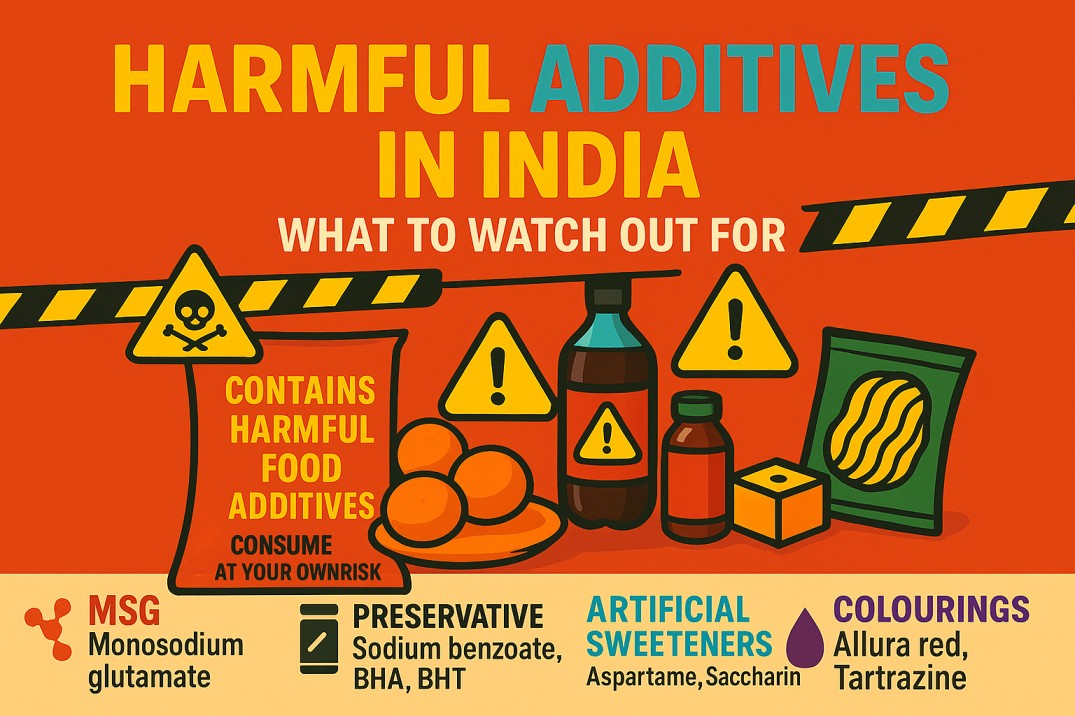
Harmful Food Additives Overview
Some commonly found harmful additives in Indian packaged foods include artificial colors (like Tartrazine), preservatives (such as Sodium Benzoate), and flavor enhancers (such as Monosodium Glutamate). These additives can be found in snacks, beverages, and processed foods, and may pose health risks if consumed in large quantities.
What to Watch Out For
- Artificial colors: Tartrazine (E102), Sunset Yellow (E110), Carmoisine (E122), Allura Red (E129)
- Preservatives: Sodium Benzoate (E211), Potassium Sorbate (E202), Benzoic Acid (E210), Sulphites (E220–E228)
- Flavor enhancers: Monosodium Glutamate / Ajinomoto (MSG, E621), Disodium Inosinate (E631), Disodium Guanylate (E627), Disodium 5’-Ribonucleotide (INS 635)
- Sweeteners: Aspartame (E951), Saccharin (E954), Cyclamates (E952), Sucralose (E955)
- Antioxidants: TBHQ (E319), BHA (E320), BHT (E321)
- Emulsifiers: Polysorbate 80 (E433), Mono- and Diglycerides (E471)
- Other chemicals: Propylene Glycol (E1520), Aluminium Compounds (E173, E554)
More Harmful Items to Avoid
- Artificial fruit and vanilla flavors: Vanillin, ethyl vanillin, benzaldehyde, methyl anthranilate
- Synthetic butter flavor: Diacetyl
- High fructose corn syrup (HFCS): Used in sweets and drinks, linked to obesity and diabetes
- Palmolein and palm oil: Used in snacks and bakery, high intake linked to heart disease
- Artificial chocolate flavor: Used in cakes and ice creams, may cause allergies
- Aluminium compounds: Used in sweets and bakery, may affect the nervous system
- Propylene glycol: Used in ice creams and bakery, may cause irritation in large doses
Nutrition to Be Careful Of in Packed Foods
When consuming packaged foods, also pay attention to these nutritional components:
- Trans Fats: Often found in baked goods, snacks, and fried foods. Increases risk of heart disease, raises bad cholesterol (LDL - low-density lipoprotein), and lowers good cholesterol (HDL - high-density lipoproteins).
- Saturated Fats: Present in processed meats, dairy, and some snacks. Excess intake can lead to heart disease and obesity.
- Added Sugars: Common in sweets, drinks, and breakfast cereals. Linked to obesity, diabetes, tooth decay, and metabolic syndrome.
- Sodium (Salt): Used as a preservative and flavor enhancer in snacks, instant noodles, and processed foods. High sodium intake can cause high blood pressure, heart disease, and kidney problems.
Common Artificial Ingredients, Usage
| Ingredient / Code | Type | Mostly Used In | Harmfulness |
|---|---|---|---|
| TBHQ (Tertiary Butylhydroquinone, INS 319) | Synthetic antioxidant | Chips, instant noodles, frozen snacks, edible oils | May cause nausea, long-term health risks |
| BHA/BHT (Butylated Hydroxyanisole/Butylated Hydroxytoluene, INS 320/321) | Synthetic antioxidant | Chips, processed snacks, coconut oil, edible oils | May be carcinogenic in high amounts |
| Synthetic Beta Carotene (INS 160a(ii)) | Artificial color | Ice creams, drinks, processed foods | Excess can affect liver, skin |
| Thickeners (INS 1422 - Acetylated Distarch Adipate, INS 415 / E 415 - Xanthan Gum, INS 1442 - Hydroxypropyl Distarch Phosphate, INS 466, etc.) | Texture agent | Processed foods | Can cause digestive issues |
| Acidity Regulators (INS 260 - Acetic Acid, 330 - Citric Acid, 331 - Sodium Citrate, 296 - Malic Acid, etc.) | pH control | Soft drinks, juices, jams, pickles | High intake may cause stomach upset |
| Phosphoric Acid (INS 338) | Acidity regulator, acidulant | Soft drinks (colas), processed foods, cheese | High intake may weaken bones, affect kidney health, tooth enamel erosion |
| Preservatives (INS 211/E211 - Sodium Benzoate, INS 202/E202 - Potassium Sorbate, INS 224 - Potassium Metabisulphite, etc.) | Shelf life | Soft drinks, juices, sauces | Linked to allergies, hyperactivity |
| Sucrose Acetate Isobutyrate (INS 444 - SAIB) | Emulsifier, stabilizer | Citrus-flavored soft drinks, sports drinks | May cause digestive issues, limited safety data |
| Dimethyl Dicarbonate (INS 242 - DMDC) | Preservative (cold sterilant) | Ready-to-drink teas, flavored water, wine, sports drinks | Rapidly breaks down into CO2 and methanol; generally safe in approved limits |
| Sweetener (Steviol Glycoside INS 960, Aspartame INS 951, Sucralose INS 955) | Sugar substitute | Diet drinks, sweets, ice creams | May cause headaches, digestive issues |
| Stabilizers (INS 1450 - Starch Sodium Octenyl Succinate, INS 445 - Glycerol Ester, INS 436 - Polysorbate 65, INS 412 - Guar Gum, INS 407 - Carrageenan, etc.) | Texture agent | Processed foods | May cause digestive issues |
| Humectant (INS 422 - Glycerin/Glycerol) | Moisture retainer | Cakes, cookies, chewing gum, baked goods | Generally safe, excess may cause digestive upset |
| Raising Agent (INS 500(ii) - Sodium Bicarbonate) | Leavening agent | Baked goods, cakes, biscuits, bread | Generally safe, excess may cause bloating |
| Acidity Regulator (INS 541(i) - Sodium Aluminium Phosphate) | Leavening agent, emulsifier | Pancake mixes, waffle mixes, processed cheese, baked goods | May affect nervous system with high aluminium exposure |
| Natural Flavouring Substance | Flavour | All processed foods, ice creams | Usually safe, but may mask real ingredients |
| Nature Identical Flavouring Substance | Flavour | Kinder Joy, candies, cakes, snacks | Generally safe, but may mask real ingredients |
| Synthetic Vinegar (E 260 / INS 260) | Acidity regulator | Pickles, sauces, snacks | Safe in small amounts, excess may irritate stomach |
| Beta Red (INS 162) | Color | Drinks, candies, ice creams | May cause allergies |
| Natural Color (INS 150C - Caramel, INS 162 - Beetroot Red) | Color | Various products | May have contaminants |
| Maltodextrin | Filler, sweetener | Snacks, drinks, ice creams, infant formula | High intake may spike blood sugar |
| Dextrose | Sweetener, filler | Sports drinks, candies, baked goods, processed foods | May spike blood sugar, generally safe in moderation |
| Artificial Chocolate Flavour | Flavour | Ice creams, drinks, cakes, bakery | May cause allergies |
| Inositol | Nutrient additive (B-vitamin-like) | Energy drinks, infant formula | Excess may affect metabolism |
| Taurine | Nutrient additive (amino acid) | Energy drinks, infant formula | High doses may affect heart health |
| Vitamin D2 - Ergocalciferol | Nutrient additive (fortification) | Fruit juices, plant-based milks, cereals, supplements | Generally safe; plant-derived vitamin D, less effective than D3 (animal source); helps calcium absorption |
| Tartrazine (INS 102) | Synthetic color | Candies, drinks, snacks | Linked to hyperactivity, allergies |
| Sunset Yellow (INS 110) | Synthetic color | Drinks, snacks, ice creams | May cause allergies, hyperactivity |
| Sodium Benzoate (INS 211) | Preservative | Soft drinks, juices | Linked to allergies, hyperactivity |
| Potassium Sorbate (INS 202) | Preservative | Juices, jams, bakery | May cause allergic reactions |
| Polysorbate 80 (INS 433) | Emulsifier | Ice creams, sauces | May cause digestive issues |
| Mono- and Diglycerides (INS 471) | Emulsifier | Ice creams, bakery | May contain trans fats |
| Lecithin (INS 322 - Soy/Sunflower Lecithin) | Emulsifier | Chocolates, ice creams, bakery | Generally safe, but may cause allergies in sensitive people |
| Carboxymethyl Cellulose (INS 466 - CMC) | Thickener | Ice creams, sauces | May cause digestive discomfort |
| Carrageenan (INS 407) | Thickener | Dairy, ice creams | Linked to inflammation in some studies |
| Aspartame (INS 951) | Artificial sweetener | Diet drinks, sweets | Linked to headaches, possible long-term risks |
| Saccharin (INS 954) | Artificial sweetener | Sweets, drinks | May cause digestive issues |
| Sucralose (INS 955) | Artificial sweetener | Sweets, drinks | Generally safe, excess may affect gut health |
| Propylene Glycol (INS 1520) | Humectant | Ice creams, bakery, drinks | May cause skin irritation, toxic in large doses |
| Sodium Nitrite/Nitrate (INS 250/251) | Preservative | Processed meats | May form carcinogenic compounds |
| Calcium Propionate (INS 282) | Preservative | Bread, bakery | May cause migraines, digestive issues |
| Benzoic Acid (INS 210) | Preservative | Soft drinks, sauces | May cause allergies |
| Aluminium Compounds (INS 173, 554, etc.) | Color, anti-caking | Sweets, bakery | May affect nervous system in excess |
| Artificial Fruit Flavour | Flavour | Drinks, candies, cakes, ice creams | May cause allergies |
| Artificial Vanilla Flavour (Vanillin, Ethyl Vanillin) | Flavour | Ice creams, cakes, bakery | May cause headaches, allergies |
| Sorbitol (INS 420) | Sweetener | Sugar-free sweets, drinks | Excess may cause diarrhea |
| Acesulfame K (INS 950) | Sweetener | Diet drinks, sweets | May affect metabolism in excess |
| Cyclamates (INS 952) | Sweetener | Sugar-free drinks | Banned in some countries, possible health risks |
| Glucose-Fructose Syrup / HFCS | Sweetener | Sweets, drinks, ice creams | Linked to obesity, diabetes |
| MSG (Monosodium Glutamate, INS 621) | Flavour enhancer | Instant noodles, snacks, Chinese food | May cause headaches, allergic reactions |
| Flavour Enhancer (INS 627, 631) | Flavour enhancer | Instant noodles, snacks | May cause allergic reactions |
| Sulphites (INS 220-228) | Preservative | Dried fruits, juices, wine | May cause asthma, allergies |
| Palmolein, Palm Oil | Edible oil | Chips, bakery, ice creams | High intake linked to heart disease |
| Edible Vegetable Oil (High Oleic Sunflower Oil, Soy Oil) | Edible oil | Infant formula, snacks, bakery | Generally safe, but excess may affect cholesterol |
| Skimmed Milk Powder | Dairy ingredient | Infant formula, ice creams, bakery | Safe, but not suitable for lactose intolerant |
| Sodium Caseinate | Milk protein | Infant formula, ice creams | Safe, but not suitable for milk allergy |
| Condiments | Seasoning | Instant noodles, snacks | May contain salt, MSG, artificial flavors |
| Semolina | Wheat product | Pasta, noodles, bakery | Contains gluten, not suitable for celiac |
| Gluten/Wheat Gluten | Protein | Instant noodles, bakery | Not suitable for celiac or gluten allergy |
| Extruded Rice | Rice product | Snacks, breakfast cereals | Safe, but may contain additives |
| Dehydrated Vegetables | Vegetable ingredient | Instant noodles, soups | Safe, but may lose nutrients |
| Hydrated Vegetable Protein | Protein | Meat substitutes, snacks | Safe, but may contain additives |
| Milk Solids | Dairy ingredient | Ice creams, sweets, bakery | Safe, but not suitable for lactose intolerant |
| Peanut Oil | Edible oil | Snacks, bakery | Safe, but allergenic for some |
| Fast Green FCF (INS 143) | Synthetic color (green) | Candies, beverages, desserts, ice creams | Linked to allergies, banned in some countries |
| Green S (INS 142) | Synthetic color (green) | Candies, ice creams, canned peas, desserts | May cause allergic reactions, hyperactivity |
| Copper Complexes of Chlorophylls and Chlorophyllins (INS 141) | Natural/semi-synthetic color (green) | Ice creams, candies, beverages, jellies | Generally safe, excess copper may be harmful |
| Brilliant Blue FCF (INS 133) | Synthetic color (blue) | Ice creams, candies, beverages, bakery | May cause allergies, hyperactivity in children |
| Sodium Sulphate (INS 514(i)) | Acidity regulator, thickener | Processed foods, instant noodles | Generally safe, excess may cause digestive issues |
| Sodium Aluminium Sulphate (INS 514(ii)) | Firming agent, acidity regulator | Pickles, candied fruits, baked goods | May affect nervous system with high aluminium exposure |
| Paprika Extract / Paprika Oleoresin (INS 160c) | Natural color & flavoring (red/orange) | Sauces, seasonings, cheese, soups, snacks | Generally safe; derived from paprika and chili peppers |
| Rosemary Extract (INS 392) | Natural antioxidant | Oils, fats, meats, snacks, bakery | Generally safe; used to prevent rancidity and extend shelf life |
| Quillaia Extract (INS 999) | Natural foaming & emulsifying agent | Beverages, cocktails, beer, confectionery | Generally safe; derived from Quillaja saponaria tree bark |
| Curcumin / Turmeric (INS 100(i)) | Natural color (yellow/orange) | Curries, mustard, cheese, butter, beverages, snacks | Generally safe; natural extract from turmeric root |
| Marigold Extract / Lutein (INS 161b) | Natural color (yellow/orange) | Poultry feed (egg yolk coloring), beverages, supplements | Generally safe; derived from marigold flowers, rich in lutein |
| Spinach Extract | Natural color (green), nutrient additive | Pasta, sauces, beverages, health supplements | Generally safe; natural extract from spinach leaves |
| Ammonium Carbonate (INS 503(ii)) | Acidity regulator, leavening agent | Baked goods, cookies, crackers | Generally safe; releases CO2 for leavening |
| Xanthan Gum (INS 418) | Thickener, stabilizer | Sauces, dressings, ice cream, gluten-free products | Generally safe; may cause digestive issues in large amounts |
| Trisodium Citrate (INS 331(iii)) | Acidity regulator, emulsifier | Soft drinks, cheese, jams, ice cream | Generally safe; citric acid salt |
| Soya Lecithin (INS 322) | Emulsifier (vegetable origin) | Chocolate, bakery, margarine, instant foods | Generally safe; derived from soybeans |
| DATEM - Mono/Diacetyl Esters (INS 472e) | Emulsifier (vegetable origin), dough conditioner | Bread, bakery, margarine | Generally safe; ‘e’ denotes specific ester type |
| Tricalcium Phosphate (INS 341(i)) | Anticaking agent, acidity regulator | Salt, spices, baking powder, supplements | Generally safe; calcium source |
| Lactic Acid (INS 270) | Acidity regulator, preservative | Pickles, yogurt, cheese, beverages | Generally safe; naturally occurs in fermented foods |
| Sodium Metabisulphite (INS 223) | Preservative, dough conditioner | Wine, dried fruits, bakery products | May cause allergic reactions, asthma in sensitive individuals |
| Potassium Chloride (INS 508) | Flavor enhancer, salt substitute | Low-sodium foods, meat products | Generally safe; used as sodium replacement |
| Potassium Carbonate (INS 501(i)) | Acidity regulator, stabilizer | Noodles, cocoa products, wine | Generally safe; alkaline agent |
| Sodium Carbonate (INS 500(i)) | Acidity regulator, raising agent | Baked goods, noodles, cocoa products | Generally safe; common baking soda ingredient |
| Disodium Phosphate (INS 339(ii)) | Acidity regulator, emulsifier | Processed cheese, cream, bakery | Generally safe; phosphate salt |
| Disodium 5’-Ribonucleotide (INS 635) | Flavor enhancer (umami) | Instant noodles, chips, seasonings, soups | Generally safe; synergistic with MSG, enhances savory taste |
| Proteolytic Enzymes (INS 1101(ii)) | Flour treatment agent | Bread, bakery products | Generally safe; breaks down proteins for better dough |
| Triphosphate (INS 451(i)) | Emulsifier, stabilizer, sequestrant | Processed meats, seafood, canned foods, dairy | Generally safe; used to retain moisture and improve texture |
| Caramel IV - Sulphite Ammonia Caramel (INS 150d) | Color (dark brown/black) | Soft drinks (colas), sauces, baked goods, beer | May contain 4-MEI (possible carcinogen); limited intake advised |
| Brilliant Black BN (INS 151) | Synthetic color (black) | Caviar, candies, jams, jellies, ice cream | Banned in some countries; may cause allergies, hyperactivity |
Examples
- Natural Flavouring Substance: Vanilla extract, orange oil, lemon oil, cinnamon, cardamom, ginger, mint.
- Nature Identical Flavouring Substance (chemical names): Vanillin (synthetic vanilla), ethyl vanillin, benzaldehyde (synthetic almond), methyl salicylate (synthetic wintergreen), isoamyl acetate (synthetic banana), cinnamaldehyde (synthetic cinnamon), linalool (synthetic floral), limonene (synthetic citrus).
- Synthetic Colors (most used): Tartrazine (INS 102, yellow), Sunset Yellow (INS 110, orange), Carmoisine (INS 122, red), Brilliant Blue (INS 133, blue), Allura Red (INS 129, red), Beta Red (INS 162), Fast Green FCF (INS 143, green), Green S (INS 142, green), Brilliant Black BN (INS 151, black - banned in USA/Canada).
- Natural Extracts & Colors: Paprika Extract (INS 160c - red/orange color from paprika), Beetroot Red (INS 162), Caramel (INS 150c), Annatto (INS 160b - yellow/orange from annatto seeds), Turmeric/Curcumin (INS 100(i) - yellow from turmeric root), Carmine/Cochineal (INS 120 - red from insects), Chlorophyll (INS 140/141 - green from plants), Anthocyanins (INS 163 - red/purple from fruits), Beta-Carotene (INS 160a - orange from carrots), Marigold Extract/Lutein (INS 161b - yellow/orange from marigold flowers), Spinach Extract (green from spinach leaves).
- Caramel Colors: Plain Caramel (INS 150a - safest), Caustic Sulphite Caramel (INS 150b), Ammonia Caramel (INS 150c), Sulphite Ammonia Caramel (INS 150d - contains 4-MEI, found in colas).
- Natural Antioxidants & Extracts: Rosemary Extract (INS 392 - prevents oil rancidity), Tocopherols/Vitamin E (INS 306-309 - natural antioxidant), Ascorbic Acid/Vitamin C (INS 300 - antioxidant & dough conditioner), Quillaia Extract (INS 999 - natural foaming agent from tree bark), Citric Acid (INS 330 - from citrus fruits).
- Flavor Enhancers (Umami): MSG/Ajinomoto (INS 621), Disodium Inosinate (INS 631), Disodium Guanylate (INS 627), Disodium 5’-Ribonucleotide (INS 635 - synergistic with MSG), Yeast Extract (natural umami, “MSG-free” alternative).
- Thickeners & Stabilizers: Xanthan Gum (INS 418 - sauces, gluten-free products), Carboxymethyl Cellulose (CMC), Carrageenan, Guar Gum, Gelatin, Triphosphate (INS 451(i) - moisture retention in meats/seafood).
- Emulsifiers: Soya Lecithin (INS 322 - vegetable origin), DATEM (INS 472e - dough conditioner), Mono- and Diglycerides (INS 471), Polysorbate 80 (INS 433), Triphosphate (INS 451(i) - also emulsifier).
- Acidity Regulators: Citric Acid (INS 330), Lactic Acid (INS 270 - naturally in fermented foods), Trisodium Citrate (INS 331(iii)), Disodium Phosphate (INS 339(ii)), Tricalcium Phosphate (INS 341(i)).
- Anti-Caking Agents: Silicon Dioxide (INS 551), Calcium Silicate (INS 552), Magnesium Carbonate (INS 504), Tricalcium Phosphate (INS 341(iii)), Sodium Aluminosilicate (INS 554 - contains aluminium). Used in salt, spices, powdered foods.
- Leavening & Raising Agents: Sodium Bicarbonate/Baking Soda (INS 500(ii) - சோடா உப்பு), Sodium Carbonate (INS 500(i)), Potassium Carbonate (INS 501(i)), Ammonium Carbonate (INS 503(ii)), Sodium Aluminium Sulphate (INS 514(ii) - contains aluminium).
- Flour Treatment Agents & Dough Conditioners: Proteolytic Enzymes (INS 1101(ii) - breaks down gluten), DATEM (INS 472e - emulsifier), Sodium Metabisulphite (INS 223 - caution: allergen for asthmatics), Ascorbic Acid/Vitamin C (INS 300 - safe), L-Cysteine (INS 920).
- Salt Substitutes & Flavor Enhancers: Potassium Chloride (INS 508 - low-sodium alternative), Yeast Extract (natural umami).
- Natural Umami Sources (MSG alternatives): Tomatoes, Parmesan cheese, mushrooms (shiitake, dried), soy sauce, miso paste, seaweed/kombu, anchovies, fish sauce, dried bonito flakes, aged meats, fermented foods.
- Sweeteners: Inverted Sugar Syrup (glucose + fructose, moisture retention), Aspartame (INS 951), Sucralose (INS 955), Saccharin (INS 954).
Other Important Chemicals
- Antioxidants in Edible Oils (coconut oil, etc.): TBHQ, BHA, BHT are added to prevent spoilage and rancidity. Sometimes, artificial flavors like ethyl methyl ketone or vanillin are added for aroma.
- Cake and Food Flavour Chemicals: Vanillin, ethyl vanillin, benzaldehyde, isoamyl acetate, methyl anthranilate (grape), diacetyl (buttery flavor), linalool, limonene, and other esters are used for smell and taste in cakes, biscuits, and sweets.
- High Oleic Sunflower Oil: A sunflower oil variant with more monounsaturated fats, used for frying and in processed foods for better shelf life and stability.
- Inositol: A vitamin-like substance (B8), used in energy drinks and infant formula for cell health and metabolism.
- Taurine: An amino acid, added to energy drinks and infant formula for neurological and muscle function.
- Emulsifiers: Help mix oil and water, improve texture (e.g., lecithin, polysorbate 80).
- Thickeners/Stabilizers: Improve texture and shelf life (e.g., carboxymethyl cellulose, carrageenan, guar gum).
- Humectants: Retain moisture to prevent drying (e.g., glycerin/glycerol).
- Preservatives: Extend shelf life (e.g., sodium benzoate, potassium sorbate).
- Artificial Sweeteners: Replace sugar (e.g., aspartame, sucralose).
- Flavour Enhancers: Boost taste (e.g., MSG, INS 627, INS 631).
- Raising Agents/Leavening Agents: Create air bubbles in baked goods for light, fluffy texture (e.g., sodium bicarbonate/baking soda, sodium aluminium phosphate).
- Acidity Regulators: Control pH levels and enhance flavor (e.g., citric acid, malic acid, sodium aluminium phosphate).
Understanding Common Food Additives
INS 500(ii) - Sodium Bicarbonate (Baking Soda / சோடா உப்பு)
What it is: Sodium bicarbonate, commonly known as baking soda (also called “சோடா உப்பு” / Soda Uppu in Tamil), is a white crystalline powder used as a raising agent in baked goods.
Common names: Baking soda, Cooking soda, சோடா உப்பு (Soda Uppu in Tamil), சமையல் சோடா (Samayal Soda in Tamil), Bicarbonate of soda, Bread soda, Meetha soda (मीठा सोडा in Hindi).
Function: As a leavening agent, it reacts with acidic ingredients (like yogurt, buttermilk, lemon juice, or vinegar) to produce carbon dioxide gas, creating bubbles that make baked goods rise and become fluffy.
Where used: Cakes, biscuits, bread, cookies, muffins, pancakes, waffles, baking powder (combination with acidic compounds), idli batter (sometimes added for fluffiness), pakora/bhajiya batter.
Safety: Generally recognized as safe (GRAS) when used in normal amounts in food. It’s also used medicinally for heartburn relief and as a household cleaner.
Concerns: Excessive consumption may cause:
- Bloating and gas
- Alkalosis (elevated blood pH) in rare cases with very high intake
- Interaction with certain medications
- Should be used in moderation, especially for people with high blood pressure (due to sodium content)
Verdict: Safe for regular consumption in baked goods. One of the least concerning food additives.
INS 541(i) - Sodium Aluminium Phosphate (Acidic)
What it is: Sodium aluminium phosphate is a synthetic compound that serves as both a leavening agent and an acidity regulator.
Function:
- Leavening agent: Used in slow-rising baked goods, particularly in pancake and waffle mixes, where it releases gas over time during heating
- Emulsifier: Helps blend ingredients in processed cheese and prevents separation
- Acidity regulator: Controls pH levels in processed foods
Where used: Pancake mixes, waffle mixes, cake mixes, self-rising flour, baking powder, processed cheese, non-dairy creamers, baked goods.
Safety concerns: The main concern is the aluminium content:
- Aluminium accumulation: Long-term, high exposure to aluminium compounds has been studied for potential links to neurological issues, though research remains inconclusive
- Alzheimer’s disease: Some studies have investigated potential connections between aluminium exposure and Alzheimer’s, but conclusive evidence is lacking
- Bone health: High aluminium levels may interfere with calcium absorption and bone health
Regulatory status: Approved by FDA and FSSAI with acceptable daily intake limits. However, some health-conscious consumers prefer to avoid aluminium-containing additives.
Alternatives: Cream of tartar, monocalcium phosphate (aluminium-free baking powders), or double-acting baking powder without aluminium.
Verdict: While approved for use, it’s advisable to limit consumption, especially for children and pregnant women. Look for “aluminium-free” labels on baking powder and pancake mixes.
INS 412 - Guar Gum
What it is: Guar gum is a natural fiber derived from guar beans (grown mainly in India and Pakistan). It’s a polysaccharide (complex carbohydrate) extracted from the seeds.
Function:
- Thickener: Increases viscosity of liquids
- Stabilizer: Prevents ingredients from separating
- Emulsifier: Helps mix oil and water
- Binding agent: Holds ingredients together
Where used: Ice cream, yogurt, sauces, salad dressings, baked goods (especially gluten-free), soups, gravies, dairy products, frozen desserts, gluten-free products, beverages, processed cheese.
Benefits:
- Natural, plant-based ingredient
- High in soluble fiber
- May help lower cholesterol
- Can aid digestive health when consumed in moderate amounts
- Gluten-free
Safety concerns:
- Digestive issues: Can cause bloating, gas, diarrhea, or cramping in some people, especially in large amounts
- Choking hazard: In concentrated supplement form, it can swell and cause blockages (not a concern in food amounts)
- Allergic reactions: Rare, but possible in sensitive individuals
- Interferes with medication: May slow absorption of some medications
Recommended intake: Small amounts in food are generally safe. Excessive intake (from supplements) should be avoided.
Verdict: Generally safe in the amounts used in food products. Natural and often used in health foods and gluten-free products. Those with sensitive digestion should monitor intake.
Dextrose
What it is: Dextrose is a simple sugar (monosaccharide) chemically identical to glucose. It’s derived from corn starch through an enzymatic process.
Function:
- Sweetener: Provides sweetness (though less sweet than table sugar/sucrose)
- Energy source: Quickly absorbed for rapid energy
- Fermentation aid: Helps yeast grow in baking
- Preservative: Helps preserve food
- Bulking agent: Adds volume and texture
Where used: Sports drinks, energy drinks, candies, baked goods, processed foods, desserts, protein bars, intravenous (IV) solutions in medicine, soft drinks, canned fruits.
Benefits:
- Quickly absorbed for immediate energy (useful in sports drinks)
- Used medically to treat low blood sugar (hypoglycemia)
- Less expensive than regular sugar
Safety concerns:
- Blood sugar spikes: Has a very high glycemic index (100), causing rapid blood sugar increases
- Weight gain: Excess consumption can lead to weight gain and obesity
- Diabetes risk: Regular high intake may contribute to insulin resistance and Type 2 diabetes
- Dental problems: Promotes tooth decay like other sugars
- Similar to HFCS: Works similarly to high fructose corn syrup in the body
Who should be cautious:
- People with diabetes or prediabetes
- Those trying to lose weight
- Individuals with insulin resistance
Verdict: Safe in moderation but should be limited like all added sugars. Not harmful in itself, but excess consumption has the same risks as other sugars. Athletes may benefit from dextrose in sports drinks for quick energy.
INS 422 - Glycerin/Glycerol
What it is: Glycerin (also called glycerol) is a colorless, odorless, sweet-tasting liquid. It can be derived from animal fats, vegetable oils (more common now), or produced synthetically.
Function:
- Humectant: Retains moisture to prevent products from drying out
- Sweetener: Adds mild sweetness (about 60% as sweet as sugar)
- Solvent: Dissolves other ingredients
- Preservative: Helps extend shelf life
- Thickener: Adds body and texture
Where used: Cakes, cookies, baked goods, chewing gum, candy, marshmallows, fondant, protein bars, low-fat foods, frostings, dried fruits, cough syrups, toothpaste, cosmetics.
Benefits:
- Generally recognized as safe (GRAS)
- Lower glycemic index than sugar (19 vs. 65 for table sugar)
- Does not promote tooth decay like sugar
- Keeps baked goods moist and soft for longer
- Prevents ice crystal formation in frozen desserts
Safety concerns:
- Digestive effects: Can cause diarrhea, bloating, gas, or nausea when consumed in large amounts (laxative effect)
- Headaches: Some people report headaches with high glycerin intake
- Dehydration: In concentrated forms, may draw water from the body
- Blood sugar: Can affect blood sugar levels (though lower impact than regular sugar)
- Caloric content: Contains calories (about 4.3 calories per gram, similar to sugar)
Safe intake: Generally safe in the amounts used in food. The acceptable daily intake (ADI) is not specified because it’s considered very safe. However, consuming products with high glycerin content may cause digestive discomfort.
Who should be cautious:
- People with kidney disease
- Individuals with diabetes (monitor blood sugar response)
- Those prone to headaches or migraines
Verdict: One of the safer food additives. Generally well-tolerated in food amounts. The main concern is digestive upset with high consumption. Natural (plant-derived) glycerin is preferable to synthetic versions.
INS 143 - Fast Green FCF
What it is: Fast Green FCF is a synthetic green food dye derived from petroleum-based chemicals. It’s part of the triarylmethane dye family.
Function: Provides bright green color to food and beverages.
Where used: Candies, ice creams, beverages, desserts, jellies, baked goods, decorative icing.
Safety concerns:
- Allergic reactions: May cause hives, itching, or allergic responses in sensitive individuals
- Hyperactivity: Some studies link synthetic colors to hyperactivity in children
- Banned in some countries: Restricted or banned in EU and several other countries
- Potential carcinogen: Some animal studies suggest possible cancer risk with high doses
Verdict: Use with caution. Opt for naturally colored products, especially for children. Banned or restricted in many countries due to safety concerns.
INS 142 - Green S
What it is: Green S (also called Acid Brilliant Green BS, Lissamine Green) is a synthetic green food dye from the triarylmethane family.
Function: Provides green color to food products.
Where used: Candies, ice creams, canned peas, desserts, mint-flavored products, jellies.
Safety concerns:
- Allergic reactions: May trigger allergies, especially in people sensitive to aspirin
- Hyperactivity: Linked to behavioral issues in children
- Banned in some countries: Not permitted in USA, Canada, Japan, and Norway
- Potential health risks: Some concerns about long-term effects
Verdict: Avoid when possible. Banned in several countries. Choose naturally colored alternatives, especially for children.
INS 141 - Copper Complexes of Chlorophylls and Chlorophyllins
What it is: Semi-synthetic green color derived from natural chlorophyll (plant pigment) stabilized with copper to prevent color fading.
Function: Provides stable green color; natural-looking alternative to synthetic green dyes.
Where used: Ice creams, candies, beverages, jellies, chewing gum, mint products, olive products.
Benefits:
- More stable than natural chlorophyll
- Natural origin (from plants like alfalfa, grass, nettles)
- Generally considered safer than synthetic green dyes
Safety concerns:
- Copper content: Excess copper may be harmful in very large amounts
- Generally safe: Acceptable daily intake (ADI) is 0-15 mg/kg body weight
Verdict: Safer alternative to synthetic green dyes (INS 142, 143). Generally well-tolerated. Natural origin makes it preferable for health-conscious consumers.
INS 133 - Brilliant Blue FCF
What it is: Brilliant Blue FCF is a synthetic blue food dye derived from petroleum. It’s part of the triphenylmethane dye family.
Function: Provides bright blue color; often mixed with yellow dyes to create green.
Where used: Ice creams, candies, beverages, baked goods, cereals, blue-colored desserts, chewing gum.
Safety concerns:
- Allergic reactions: May cause hives, itching, or respiratory issues in sensitive people
- Hyperactivity: Some studies link it to behavioral issues in children
- Banned in some countries: Not permitted in Germany, Austria, France, Norway, Sweden, and Switzerland
- Potential health risks: Animal studies show possible effects on nervous system and kidneys at high doses
Verdict: Use sparingly. Avoid for children prone to hyperactivity. Opt for naturally colored foods when possible.
INS 514(i) - Sodium Sulphate
What it is: Sodium sulphate is a mineral salt (sodium salt of sulfuric acid) used as a food additive.
Function:
- Acidity regulator: Controls pH levels
- Thickener: Improves texture in some foods
- Diluent: Used to dilute other additives
Where used: Processed foods, instant noodles, sauces, condiments.
Safety concerns:
- Digestive issues: Can cause diarrhea, bloating, or stomach cramps in large amounts
- Laxative effect: Acts as a bowel stimulant
- Generally safe: In small food amounts, considered safe
Verdict: Generally safe in the amounts used in food. Excessive consumption may cause digestive discomfort.
INS 514(ii) - Sodium Aluminium Sulphate
What it is: Sodium aluminium sulphate is a double salt containing both aluminium and sodium. Used as a food additive.
Function:
- Firming agent: Keeps pickles and candied fruits firm
- Acidity regulator: Controls pH
- Leavening agent: Sometimes used in baking powders
Where used: Pickles, candied fruits, baked goods, processed cheese, some baking powders.
Safety concerns:
- Aluminium exposure: Long-term high aluminium intake may affect nervous system
- Linked to health concerns: Some studies suggest links to Alzheimer’s disease (though not conclusive)
- Accumulation: Aluminium can accumulate in the body over time
- EU restrictions: Limited use in some European countries
Verdict: Use with caution. Limit intake of foods with aluminium-containing additives, especially for children, elderly, and people with kidney issues. Opt for aluminium-free alternatives when possible.
What Are Anti-Caking Agents?
Anti-caking agents are food additives that prevent powdered or granulated ingredients from clumping, sticking together, or forming lumps due to moisture absorption. They keep products free-flowing and easy to pour or sprinkle.
How they work:
- Absorb moisture: Prevent water from binding particles together
- Create barriers: Coat particles to reduce surface contact
- Reduce humidity: Lower moisture content in the product
Common anti-caking agents:
- Silicon Dioxide (INS 551): Sand-like substance used in salt, spices, powdered foods
- Calcium Silicate (INS 552): Used in baking powder, table salt, spices
- Magnesium Carbonate (INS 504): Used in table salt, icing sugar
- Tricalcium Phosphate (INS 341(iii)): Used in salt, baking powder, spice mixes
- Sodium Ferrocyanide (INS 535): Used in table salt (yellow prussiate of soda)
- Sodium Aluminosilicate (INS 554): Contains aluminium; used in salt, powdered foods
Where used: Table salt, powdered sugar, icing sugar, baking powder, spice mixes, powdered milk, instant coffee, dried soup mixes, grated cheese, cocoa powder.
Safety: Most anti-caking agents are generally recognized as safe (GRAS) at the levels used in food. However, some consumers prefer to avoid aluminium-containing anti-caking agents (like INS 554, INS 556) due to concerns about aluminium accumulation.
Natural alternatives: Rice flour, cornstarch, arrowroot powder can act as natural anti-caking agents in home cooking.
INS 451(i) - Triphosphate / Pentasodium Triphosphate
What it is: Triphosphate (also called pentasodium triphosphate or sodium tripolyphosphate) is a phosphate salt used as a food additive. It’s a white powder or granules.
Function:
- Emulsifier: Helps mix ingredients and prevent separation
- Stabilizer: Maintains texture and consistency
- Sequestrant: Binds metal ions to prevent oxidation and discoloration
- Water retention: Prevents moisture loss in processed foods
- pH buffer: Maintains acidity levels
Where used: Processed meats (ham, sausages, bacon), canned fish, seafood (scallops, shrimp), processed cheese, canned vegetables, instant noodles, breakfast cereals, pet food.
Benefits:
- Improves texture: Makes processed meats tender and juicy
- Extends shelf life: Prevents oxidation and spoilage
- Moisture retention: Keeps products from drying out
- Cost-effective: Allows manufacturers to add water weight to products
Why used in seafood:
- Prevents freezer burn: Retains moisture in frozen seafood
- Whitening effect: Makes seafood appear fresher and whiter
- Texture improvement: Prevents mushiness in thawed seafood
- Weight increase: Seafood treated with phosphates can absorb 10-30% more water (controversial)
Safety concerns:
- Phosphate overload: Excessive phosphate intake linked to kidney disease, cardiovascular issues, and bone problems
- Kidney disease: People with kidney issues should limit phosphate intake
- Calcium absorption: High phosphate may interfere with calcium absorption
- Hidden phosphates: Often not clearly labeled; look for “water added” or “retained water”
- Generally safe: At typical food levels, considered safe for healthy individuals
Who should be cautious:
- People with kidney disease or chronic kidney disease (CKD)
- Those with cardiovascular disease
- Individuals with phosphate sensitivity
Acceptable Daily Intake (ADI): 0-70 mg/kg body weight (set by WHO/FAO).
Verdict: Generally safe for healthy people in moderate amounts. However, excessive consumption of processed foods high in phosphates may pose health risks. Those with kidney disease should avoid or limit foods containing phosphates. Read labels carefully—“water added” or “enhanced” seafood/meats often contain phosphates.
INS 150d - Caramel IV (Sulphite Ammonia Caramel)
What it is: Caramel IV (also called sulphite ammonia caramel or Class IV caramel color) is a dark brown to black food coloring made by heating sugars with ammonia and sulphite compounds. It’s one of four types of caramel colors (INS 150a, 150b, 150c, 150d).
Function:
- Color: Provides dark brown to black color
- Flavor: Adds slight caramel/burnt sugar taste
- Visual appeal: Makes beverages and foods look richer
Where used: Soft drinks (especially colas like Coca-Cola, Pepsi), dark beers, soy sauce, gravies, baked goods, sauces, chocolate products, instant coffee, licorice, pet food.
Why it’s concerning:
- 4-MEI (4-Methylimidazole): A byproduct formed during production; classified as a possible carcinogen by the International Agency for Research on Cancer (IARC)
- California Prop 65: California requires warning labels on products with significant 4-MEI levels
- Industry changes: Some manufacturers have reformulated to reduce 4-MEI content after concerns
Safety concerns:
- Possible carcinogen: 4-MEI may increase cancer risk in very high doses (based on animal studies)
- Regulatory limits: FDA considers current levels safe; California has stricter standards
- Long-term effects: Unclear effects of chronic low-level exposure
- Sulphites: Contains sulphites, which can trigger allergies or asthma in sensitive individuals
Different caramel types:
- INS 150a (Plain Caramel): Safest; just heated sugar, no chemicals
- INS 150b (Caustic Sulphite Caramel): Made with sulphite compounds
- INS 150c (Ammonia Caramel): Made with ammonia compounds
- INS 150d (Sulphite Ammonia Caramel): Made with both ammonia and sulphites; most concerning due to 4-MEI
Who should be cautious:
- Heavy consumers of cola drinks and dark-colored sodas
- People avoiding potential carcinogens
- Those with sulphite sensitivities or asthma
Acceptable Daily Intake (ADI): 0-200 mg/kg body weight (for all caramel colors combined).
Verdict: While approved by regulatory agencies, INS 150d is the most controversial caramel color due to 4-MEI content. If concerned, limit consumption of dark sodas and check labels for “caramel color” or “INS 150d.” INS 150a (plain caramel) is the safest alternative.
INS 151 - Brilliant Black BN / Black PN
What it is: Brilliant Black BN (also called Black PN) is a synthetic black food dye derived from coal tar or petroleum. It’s part of the azo dye family.
Function:
- Color: Provides black or very dark brown color
- Blending: Often mixed with other colors to create darker shades
Where used: Caviar (imitation), candies, jellies, jams, ice cream, baked goods, decorative icing, licorice, sauces, fish roe substitutes.
Safety concerns:
- Banned in several countries: Not permitted in USA, Canada, Japan, Norway, and some other countries
- Allergic reactions: May cause hives, itching, skin reactions, or respiratory issues in sensitive individuals
- Hyperactivity: Some studies link synthetic azo dyes to behavioral issues and hyperactivity in children
- Asthma: May trigger asthma attacks in susceptible individuals
- Aspirin sensitivity: People sensitive to aspirin may also react to azo dyes
- Carcinogenicity concerns: Some azo dyes have raised cancer concerns in animal studies
Regulatory status:
- EU: Approved for use with restrictions
- India: Permitted under FSSAI regulations
- USA/Canada: Banned
- Australia/New Zealand: Permitted
Who should be cautious:
- Children prone to hyperactivity or ADHD
- People with asthma or respiratory conditions
- Those with aspirin sensitivity or salicylate intolerance
- Individuals with synthetic dye allergies
Acceptable Daily Intake (ADI): 0-1 mg/kg body weight (EU standard).
Verdict: Avoid when possible, especially for children. Banned in multiple countries due to safety concerns. Opt for naturally colored foods or products using safer colorants. If you see “Brilliant Black BN,” “Black PN,” or “INS 151” on labels, consider alternatives.
INS 160c - Paprika Extract / Paprika Oleoresin
What it is: Paprika extract (paprika oleoresin) is a natural red-orange color and flavoring agent extracted from the fruits of the Capsicum annuum plant, which includes paprika and chili peppers. It contains carotenoid pigments (capsanthin, capsorubin) responsible for the color.
Function:
- Natural color: Provides red, orange, or reddish-orange color
- Flavoring agent: Adds mild peppery, smoky flavor
- Antioxidant: Contains natural antioxidants
Where used: Sauces, seasonings, cheese products, soups, snacks, processed meats, spice blends, condiments, chips.
Benefits:
- Natural origin: Extracted from real paprika peppers
- Rich in antioxidants: Contains carotenoids with health benefits
- Safe: Generally recognized as safe (GRAS) with no known adverse effects
- No synthetic chemicals: Unlike artificial colors, it’s a natural plant extract
Safety concerns:
- Allergies: Rare, but some people may be allergic to paprika or peppers
- Mild irritation: In concentrated forms, may cause mild digestive irritation in sensitive individuals
- Generally safe: Widely used and considered one of the safest colorants
Verdict: Excellent natural alternative to synthetic red/orange dyes. Safe for most people. Derived from natural peppers, it’s a healthier choice for adding color and flavor to food.
INS 392 - Rosemary Extract
What it is: Rosemary extract is a natural antioxidant derived from the leaves of the rosemary plant (Rosmarinus officinalis). It contains powerful antioxidant compounds like carnosic acid, carnosol, and rosmarinic acid.
Function:
- Natural antioxidant: Prevents oxidation and rancidity in oils and fats
- Preservative: Extends shelf life of food products
- Antimicrobial: Has natural antibacterial properties
- Flavor enhancer: Adds subtle herbal aroma
Where used: Oils, fats, butter, processed meats (sausages, bacon), snacks, nuts, baked goods, sauces, ready-to-eat meals.
Benefits:
- Natural origin: Extracted from rosemary plant
- Health benefits: Contains antioxidants with potential anti-inflammatory and neuroprotective properties
- Safe: Generally recognized as safe (GRAS)
- Replaces synthetic antioxidants: Natural alternative to TBHQ, BHA, BHT
- Clean label: Preferred by health-conscious consumers
Safety concerns:
- Allergies: Rare, but possible in people allergic to rosemary
- High doses: Excessive consumption (far beyond food amounts) may cause nausea or stomach upset
- Generally safe: No significant safety concerns at levels used in food
Verdict: One of the best natural antioxidants. Excellent alternative to synthetic preservatives. Safe, effective, and health-beneficial. Highly recommended for clean-label products.
INS 999 - Quillaia Extract
What it is: Quillaia extract (quillay extract) is a natural foaming and emulsifying agent derived from the bark of the Quillaja saponaria tree, native to South America. It contains natural saponins (soap-like compounds).
Function:
- Foaming agent: Creates foam and bubbles in beverages
- Emulsifier: Helps mix oil and water-based ingredients
- Stabilizer: Maintains foam and texture
- Surface active agent: Improves mouthfeel in drinks
Where used: Beverages, cocktail mixers, beer, root beer, soft drinks, confectionery, ice cream, baked goods, photographic chemicals.
Benefits:
- Natural origin: Extracted from tree bark
- Effective foaming: Creates stable foam naturally
- Safe: Approved by FDA and other food authorities
- Plant-based: Suitable for vegetarian and vegan products
Safety concerns:
- High doses: Can be toxic in very high concentrated amounts (not a concern in food)
- Digestive irritation: In large amounts, may cause stomach upset
- Allergies: Rare allergic reactions possible
- Regulated use: Approved only for specific uses at controlled levels
- Safe in food: At levels used in food and beverages, it’s considered safe
Acceptable Daily Intake (ADI): 0-1 mg/kg body weight (small amounts are safe).
Verdict: Generally safe in the amounts used in food and beverages. Natural foaming agent with no significant health concerns at regulated levels. Preferable to synthetic foaming agents.
INS 621 - MSG (Monosodium Glutamate) / Ajinomoto
What it is: Monosodium glutamate (MSG) is a flavor enhancer made from glutamic acid, an amino acid naturally found in many foods. It’s the sodium salt of glutamic acid.
Common names: MSG, Ajinomoto (अजीनोमोटो / ஏ.எம்.எஸ்), China Salt, Taste Powder, चायनीज नमक (Chinese Namak), சுவை தூள் / சீனா உப்பு (Suvai Thool / China Uppu in Tamil).
Brand recognition: “Ajinomoto” is the most famous brand name for MSG, produced by the Japanese company Ajinomoto Co. The name has become synonymous with MSG in many countries, similar to how “Xerox” became synonymous with photocopying.
Function:
- Flavor enhancer: Enhances umami (savory) taste in food
- Taste amplifier: Makes food taste more flavorful and “meaty”
- Reduces salt usage: Can reduce sodium intake by replacing some salt while maintaining flavor
Where used: Instant noodles (like Maggi, Top Ramen, Yippee), Chinese food, Indo-Chinese cuisine, restaurant food, packaged snacks, soups, seasonings, chips, processed meats, canned vegetables, sauces, ready-to-eat meals.
Natural occurrence: Glutamate naturally occurs in tomatoes, cheese, mushrooms, soy sauce, seaweed, and fermented foods. MSG is the concentrated, isolated form.
Safety concerns and controversies:
- “Chinese Restaurant Syndrome”: In the 1960s, some people reported symptoms like headaches, sweating, and numbness after eating Chinese food, attributed to MSG. However, scientific studies have largely debunked this.
- Headaches and migraines: Some sensitive individuals report headaches, though large-scale studies show no consistent link
- Allergic-like reactions: Rare cases of flushing, sweating, chest tightness in sensitive people
- Asthma: May trigger asthma symptoms in very sensitive individuals
- Overeating: May increase appetite and lead to overeating in some studies
- Scientific consensus: FDA, WHO, and most food authorities consider MSG safe for general population at typical consumption levels
Who should be cautious:
- People who notice sensitivity or reactions after MSG consumption
- Those with severe asthma (rare cases of triggers)
- Individuals prone to migraines
Acceptable Daily Intake (ADI): No specific limit set by WHO because it’s considered safe. However, moderation is advised.
Hidden sources: MSG can be present in foods without being labeled as “MSG.” Look for: “hydrolyzed protein,” “autolyzed yeast,” “yeast extract,” “protein isolate,” “textured protein,” “flavoring,” “natural flavoring.”
Cultural perception: MSG has a controversial reputation, particularly in India and Western countries, though it’s widely used in East Asian cuisines for decades without major health issues.
Verdict: Generally safe for most people in moderate amounts. Regulatory authorities worldwide approve its use. However, some individuals may be sensitive. If you experience symptoms after consuming MSG, it’s best to avoid it. The controversy around MSG is largely based on outdated studies and cultural biases rather than solid scientific evidence.
INS 100(i) - Curcumin / Turmeric
What it is: Curcumin is a natural yellow-orange pigment extracted from the rhizome (root) of the turmeric plant (Curcuma longa). It’s the compound that gives turmeric its characteristic bright yellow color.
Function:
- Natural color: Provides vibrant yellow to orange color
- Flavoring: Adds mild earthy, slightly bitter flavor
- Antioxidant: Contains natural antioxidants
- Health benefits: Known for anti-inflammatory and potential medicinal properties
Where used: Curries, mustard, cheese, butter, margarine, beverages, snacks, spice blends, pickles, sauces, rice dishes, baked goods, confectionery.
Benefits:
- Natural origin: Pure plant extract from turmeric root
- Health benefits: Contains curcumin with anti-inflammatory, antioxidant, and potential anticancer properties
- Safe: Generally recognized as safe (GRAS) with centuries of culinary use
- No synthetic chemicals: Natural alternative to synthetic yellow dyes (like Tartrazine INS 102)
- Traditional use: Used in Indian cuisine for thousands of years
- Nutrient-rich: Contains vitamins and minerals
Safety concerns:
- Staining: Can stain skin, clothing, and surfaces due to intense color
- Allergies: Extremely rare, but possible in sensitive individuals
- Digestive issues: Very high doses (far beyond food amounts) may cause stomach upset
- Drug interactions: High supplement doses may interact with blood thinners (not a concern in food amounts)
- Generally safe: One of the safest natural colorants with no known adverse effects at food levels
Verdict: Excellent natural colorant and flavoring. Extremely safe with added health benefits. Far superior to synthetic yellow dyes. Highly recommended for natural, clean-label products. Traditional ingredient with proven safety record.
INS 161b - Marigold Extract / Lutein
What it is: Marigold extract (also known as lutein extract) is a natural yellow-orange pigment derived from the petals of marigold flowers (Tagetes erecta). It contains carotenoid compounds, primarily lutein and zeaxanthin.
Function:
- Natural color: Provides yellow to orange color
- Nutrient additive: Rich in lutein (beneficial for eye health)
- Feed additive: Used in poultry feed to enhance egg yolk color and chicken skin color
- Dietary supplement: Added for its antioxidant and eye health benefits
Where used: Poultry feed (to color egg yolks and chicken meat), beverages, dietary supplements, health foods, margarine, dairy products, baked goods, confectionery.
Benefits:
- Natural origin: Extracted from marigold flower petals
- Eye health: Lutein is scientifically proven to support eye health and reduce risk of macular degeneration
- Antioxidant: Contains powerful antioxidants
- Safe: No known adverse effects; widely used and studied
- Consumer preference: Provides naturally colored egg yolks (deep yellow-orange color preferred by consumers)
- Clean label: Natural alternative to synthetic yellow dyes
Why used in poultry feed:
- Egg yolk color: Creates vibrant yellow-orange yolk color that consumers associate with freshness and quality
- Chicken skin color: Improves yellow skin tone in poultry
- Nutritional benefit: Eggs from hens fed marigold extract have higher lutein content, beneficial for human eye health
- Natural method: Safer than synthetic colorants
Safety concerns:
- Allergies: Very rare; possible in people allergic to marigold flowers
- Generally safe: Approved by FDA and global food authorities with no significant safety concerns
- No toxicity: Lutein is a nutrient with established safety profile
Acceptable Daily Intake (ADI): Not specified because it’s considered extremely safe.
Verdict: Excellent natural colorant with added nutritional benefits. Completely safe and beneficial for eye health. Widely used in poultry industry to create naturally colored eggs. Highly recommended for health-conscious consumers seeking natural alternatives.
Spinach Extract
What it is: Spinach extract is a natural green color and nutrient additive derived from spinach leaves (Spinacia oleracea). It contains chlorophyll, carotenoids, and other natural plant compounds.
Function:
- Natural color: Provides green color to food products
- Nutrient additive: Rich in vitamins (A, C, K, folate), minerals (iron, calcium), and antioxidants
- Flavor enhancer: Adds subtle vegetable flavor
- Fortification: Used to boost nutritional content
Where used: Green pasta, sauces, smoothies, beverages, health supplements, baby food, baked goods (green bread, cakes), ice cream, protein bars, natural food coloring.
Benefits:
- Natural origin: Pure extract from fresh or dried spinach leaves
- Nutrient-dense: Contains vitamins, minerals, antioxidants, and phytonutrients
- Safe: Completely safe; it’s literally concentrated spinach
- Health benefits: Anti-inflammatory, antioxidant, supports eye health, bone health, and immunity
- Clean label: Ideal for natural and organic products
- Allergen-friendly: Generally well-tolerated with minimal allergy risk
- Vegan/vegetarian: Plant-based, suitable for all diets
Safety concerns:
- Oxalates: Spinach contains oxalates, which may contribute to kidney stones in susceptible individuals (only a concern in very high amounts)
- Allergies: Extremely rare
- Generally safe: No significant safety concerns; it’s a vegetable extract
Why used:
- Natural green color: Safer alternative to synthetic green dyes (like Fast Green FCF INS 143, Green S INS 142)
- Nutritional boost: Adds vitamins and minerals to processed foods
- Clean label: Appeals to health-conscious consumers seeking natural ingredients
- Versatile: Works in various food products
Verdict: One of the safest and healthiest natural colorants. Provides both color and nutrition. Excellent for clean-label, organic, and health-focused products. Completely safe with added health benefits. Highly recommended for children’s foods and health products.
INS 635 - Disodium 5’-Ribonucleotide (Flavor Enhancer)
What it is: Disodium 5’-ribonucleotide (also called I+G) is a flavor enhancer composed of two compounds: disodium inosinate (INS 631) and disodium guanylate (INS 627). It’s a white crystalline powder derived from yeast or fish/meat.
Function:
- Flavor enhancer: Enhances umami (savory) taste in food
- Synergistic effect: Works powerfully with MSG (INS 621); together they create stronger flavor than either alone
- Reduces MSG usage: Allows manufacturers to use less MSG while maintaining savory taste
- Cost-effective: More expensive than MSG, so it’s often combined with it
Is INS 635 a substitute for MSG (Ajinomoto)?
- Not exactly a substitute: INS 635 is typically used alongside MSG, not instead of it
- Synergy: INS 635 has a synergistic effect with MSG—when used together, they enhance each other’s effects, creating a stronger umami taste
- Reduces MSG amount: By using INS 635 with MSG, manufacturers can reduce the total amount of MSG needed, which helps with labeling and consumer perception
- Similar purpose: Both enhance savory, meaty flavors, but INS 635 is more potent and works best with MSG
- Cost: INS 635 is more expensive, so it’s rarely used alone; MSG is cheaper and more commonly used as the main flavor enhancer
Where used: Instant noodles, chips, snacks, seasonings, soups, sauces, savory snacks, processed meats, bouillon cubes, convenience foods.
Common combinations:
- MSG + INS 635: Most common combination for maximum umami flavor
- Yeast extract + INS 635: For “MSG-free” labeling (though still provides umami)
Safety concerns:
- Similar to MSG: May cause similar reactions in sensitive individuals (headaches, flushing)
- Gout risk: Contains purines, which can increase uric acid; people with gout should limit intake
- Allergic reactions: Rare, but possible in sensitive individuals
- Generally safe: Considered safe by FDA, WHO, and other authorities at typical food levels
Who should be cautious:
- People with gout or high uric acid levels (purines convert to uric acid)
- Those sensitive to MSG or flavor enhancers
- Individuals with asthma (rare triggers)
Acceptable Daily Intake (ADI): No specific limit set, but moderation advised.
Verdict: Generally safe flavor enhancer. Not a true MSG substitute, but rather a synergistic partner. People avoiding MSG should also avoid INS 635. Those with gout should be particularly cautious.
Yeast Extract - Natural Flavor Enhancer
What it is: Yeast extract is a food flavoring made from the cell contents of yeast (usually Saccharomyces cerevisiae, the same yeast used in bread and beer). The yeast cells are broken down (lysed), and the soluble parts are extracted, concentrated, and used as a flavoring agent.
Function:
- Flavor enhancer: Provides rich, savory, umami taste
- Natural umami: Contains naturally occurring glutamates (like MSG, but from natural source)
- Nutrient-rich: Contains B vitamins, amino acids, and minerals
- Savory base: Used in soups, gravies, sauces, and vegetarian/vegan products
Is yeast extract a substitute for MSG?
- Natural alternative: Yes, yeast extract is often used as a “natural” substitute for MSG
- Contains glutamates: Yeast extract naturally contains glutamic acid (the same compound found in MSG), but it’s from a natural source (yeast), not synthesized
- “MSG-free” labeling: Products using yeast extract can be labeled “no added MSG” or “MSG-free,” even though they contain naturally occurring glutamates
- Marketing advantage: Consumers perceive yeast extract as natural and healthier, though it provides similar umami taste
- Similar effect: Provides umami flavor like MSG, but typically requires larger amounts
- Taste difference: Yeast extract has a more complex, slightly nutty, savory flavor compared to pure MSG
Where used: Vegetarian/vegan meat substitutes, savory snacks, soups, sauces, gravies, bouillon cubes, seasonings, spreads (like Marmite, Vegemite), chips, crackers, instant noodles.
Common products:
- Marmite / Vegemite: Famous yeast extract spreads
- Vegetarian bouillon cubes: Often use yeast extract for savory flavor
- “Natural” or “clean-label” snacks: Use yeast extract instead of MSG
Benefits:
- Natural origin: Derived from yeast, a natural microorganism
- Nutrient-rich: Contains B vitamins (especially B12 in fortified versions), amino acids, minerals
- Umami flavor: Provides savory taste without synthetic additives
- Vegan/vegetarian: Suitable for plant-based diets
- Clean label: Appeals to consumers seeking “natural” ingredients
Safety concerns:
- High glutamate: Contains naturally high levels of glutamic acid; sensitive individuals may react similarly to MSG
- High sodium: Yeast extract is often high in salt (sodium)
- Histamine: May trigger histamine intolerance in sensitive individuals
- Allergies: Rare yeast allergies possible
- Migraines: High glutamate content may trigger migraines in susceptible people
- Generally safe: Considered safe for most people; widely used and studied
Who should be cautious:
- People sensitive to MSG or glutamates
- Those with histamine intolerance
- Individuals with yeast allergies (rare)
- People on low-sodium diets (check sodium content)
Verdict: Natural alternative to MSG, often used in “clean-label” products. Contains naturally occurring glutamates, so it’s not truly “MSG-free” in effect, though it can be labeled that way. Generally safe, but those sensitive to MSG may also react to yeast extract.
Natural Umami Flavor Sources
What is umami? Umami is the fifth basic taste (along with sweet, salty, sour, bitter). It’s a savory, meaty, broth-like taste caused by glutamates and nucleotides. The word “umami” comes from Japanese, meaning “pleasant savory taste.”
Natural sources of umami flavor (alternatives to MSG):
High in natural glutamates:
- Tomatoes: Especially concentrated tomato paste, sun-dried tomatoes
- Parmesan cheese: Aged cheeses are very high in natural glutamates
- Mushrooms: Shiitake, portobello, dried mushrooms
- Soy sauce: Fermented soybeans, high in natural glutamates
- Miso paste: Fermented soybean paste (Japanese)
- Seaweed / Kombu: Dried kelp used in Japanese dashi broth
- Anchovies: Fermented fish, high in umami compounds
- Fish sauce: Fermented fish sauce (used in Thai, Vietnamese cuisine)
High in natural nucleotides (similar to INS 635):
- Dried bonito flakes (katsuobushi): Used in Japanese dashi
- Dried fish: Anchovies, mackerel, sardines
- Dried mushrooms: Shiitake, porcini
- Meat broths: Slow-cooked bone broths, stocks
Other natural umami-rich foods:
- Aged/fermented foods: Aged meats (prosciutto, salami), aged cheeses, fermented beans
- Green tea: Contains glutamates
- Walnuts: Contain natural glutamates
- Peas and corn: Contain nucleotides
How to use natural umami boosters in cooking:
- Add tomato paste or sun-dried tomatoes to soups, stews, curries
- Use mushrooms (especially dried shiitake) in broths and gravies
- Add Parmesan cheese rinds to soups and sauces while cooking
- Use soy sauce or tamari for marinades and stir-fries
- Make stocks with bones and vegetables for natural depth
- Add miso paste to soups and dressings
- Use seaweed/kombu in broths and rice cooking water
- Add fish sauce sparingly to Asian dishes (even non-seafood dishes)
Benefits of natural umami sources:
- No synthetic additives: Pure natural ingredients
- Additional nutrients: Vitamins, minerals, antioxidants, protein
- Complex flavor: More depth and richness than single-compound enhancers
- Cultural traditions: Used for centuries in cuisines worldwide
- Generally safe: Minimal risk of adverse reactions
Verdict: Natural umami sources provide rich, savory flavor without synthetic additives. Ideal for home cooking and clean-label products. Healthier alternative to MSG and INS 635.
Inverted Sugar Syrup - What Is It?
What it is: Inverted sugar syrup (also called invert sugar or invert syrup) is a liquid sweetener made by breaking down (hydrolyzing) regular sugar (sucrose) into its two component sugars: glucose and fructose.
How it’s made:
- Start with sucrose: Regular white sugar (table sugar)
- Add acid or enzyme: Mix with citric acid, cream of tartar, or invertase enzyme
- Heat: Warm the mixture, which breaks (inverts) the sucrose molecule
- Result: A thick, sweet syrup containing equal parts glucose and fructose
Why “inverted”?
- Optical rotation: Sucrose rotates polarized light to the right (+); after hydrolysis, the mixture rotates light to the left (-), hence “inverted”
- Chemical structure: The glycosidic bond in sucrose is “inverted” during hydrolysis
Function:
- Sweetener: Sweeter than regular sugar (about 20-30% sweeter)
- Moisture retention: Keeps baked goods and candies moist and soft
- Prevents crystallization: Keeps candy, fondant, and syrups smooth without graininess
- Enhances texture: Improves mouthfeel and softness in baked goods
- Browning agent: Contributes to Maillard reaction (golden-brown color) in baking
- Preservative effect: High sugar content inhibits microbial growth
Where used: Candies, fondant, chocolates, ice cream, baked goods (cakes, cookies), jams, jellies, syrups, beverages, confectionery, pastries, frostings.
Advantages over regular sugar:
- Sweeter: Requires less to achieve same sweetness
- Smooth texture: Prevents graininess in candies and icings
- Moisture retention: Keeps products fresh longer
- Better dissolution: Dissolves easily in cold liquids
Health considerations:
- Same as sugar: Contains same calories and carbohydrates as regular sugar
- High in fructose: Contains 50% fructose, which is metabolized by the liver
- Blood sugar: Glucose portion raises blood sugar quickly; not suitable for diabetics
- Calories: High-calorie sweetener; contributes to weight gain if overconsumed
- Tooth decay: Like all sugars, can cause dental cavities
Who should be cautious:
- People with diabetes (raises blood sugar)
- Those managing weight (high in calories)
- Individuals with fructose intolerance or malabsorption
Natural version: You can make inverted sugar syrup at home by heating sugar with lemon juice or cream of tartar.
Verdict: Inverted sugar syrup is essentially sugar in a different form—sweeter, more functional, but nutritionally similar. Consume in moderation like any other sugar. Not healthier than regular sugar, just more functional for certain food applications.
Understanding INS Numbering System: What Do (i), (ii), (iii), (a), (b), (c) Mean?
INS numbering system: The International Numbering System (INS) assigns unique numbers to food additives for easy identification worldwide. Sometimes you’ll see letters or Roman numerals after the number—here’s what they mean:
Roman numerals (i), (ii), (iii), (iv): These indicate different forms or types of the same basic additive. They usually represent different chemical salts, esters, or formulations of the same compound.
Examples:
INS 500 - Sodium Carbonates (different salts):
- INS 500(i): Sodium Carbonate (washing soda)
- INS 500(ii): Sodium Bicarbonate (baking soda / சோடா உப்பு)
- INS 500(iii): Sodium Sesquicarbonate
INS 501 - Potassium Carbonates:
- INS 501(i): Potassium Carbonate
- INS 501(ii): Potassium Bicarbonate
INS 503 - Ammonium Carbonates:
- INS 503(i): Ammonium Carbonate
- INS 503(ii): Ammonium Bicarbonate
INS 514 - Sodium Sulphates:
- INS 514(i): Sodium Sulphate
- INS 514(ii): Sodium Aluminium Sulphate (contains aluminium)
INS 331 - Sodium Citrates:
- INS 331(i): Monosodium Citrate
- INS 331(ii): Disodium Citrate
- INS 331(iii): Trisodium Citrate
INS 339 - Sodium Phosphates:
- INS 339(i): Monosodium Phosphate
- INS 339(ii): Disodium Phosphate
- INS 339(iii): Trisodium Phosphate
INS 341 - Calcium Phosphates:
- INS 341(i): Monocalcium Phosphate / Tricalcium Phosphate
- INS 341(ii): Dicalcium Phosphate
- INS 341(iii): Tricalcium Phosphate
Letters (a), (b), (c), (d): These indicate different chemical forms, isomers, or sources of the same type of compound. Common with colors and vitamins.
Examples:
INS 160 - Carotenoids (natural colors):
- INS 160a: Beta-Carotene (orange, from carrots)
- INS 160b: Annatto (yellow-orange, from annatto seeds)
- INS 160c: Paprika Extract / Paprika Oleoresin (red, from paprika)
- INS 160d: Lycopene (red, from tomatoes)
- INS 160e: Beta-apo-8’-carotenal (orange)
- INS 160f: Beta-apo-8’-carotenic acid ethyl ester (orange)
INS 472 - Esters of Mono- and Diglycerides (emulsifiers):
- INS 472a: Acetic acid esters
- INS 472b: Lactic acid esters
- INS 472c: Citric acid esters
- INS 472e: DATEM (Diacetyl tartaric acid esters) - commonly used in bread
- INS 472f: Tartaric acid esters
What does the ‘e’ in INS 472e mean?
- The ‘e’ indicates DATEM (Diacetyl Tartaric Acid Esters of Mono- and Diglycerides)
- INS 472e is a specific type of emulsifier made by combining mono- and diglycerides with tartaric acid and acetic acid
- It’s particularly effective as a dough conditioner and emulsifier in bread and bakery products
- Function: Strengthens dough, improves volume, creates softer texture, extends shelf life
- Origin: Usually derived from vegetable oils (vegetable origin)
- Safety: Generally recognized as safe (GRAS)
INS 1400 - Dextrins (modified starches):
- INS 1400(a): Dextrin roasted starch
- INS 1400(b): Acid-treated starch
- INS 1400(c): Alkaline-treated starch
Why use these suffixes?
- Precision: Different forms may have different properties, uses, or safety profiles
- Regulation: Helps regulators specify which exact form is approved
- Labeling clarity: Allows manufacturers to specify exactly what form they’re using
- Safety: Some forms may be safer or more suitable than others (e.g., INS 514(ii) contains aluminium, while INS 514(i) doesn’t)
Important for consumers:
- Check the suffix: INS 500(i) and INS 500(ii) are different compounds with different properties
- Safety differences: Some suffixes indicate forms to avoid (e.g., aluminium-containing compounds)
- Function varies: Different forms may be used for different purposes even within the same INS number
Verdict: The suffixes (i), (ii), (iii), (a), (b), (c) help identify specific chemical forms of additives. Understanding these helps you make informed choices, especially when certain forms have safety concerns (like aluminium compounds) or different functions.
Flour Treatment Agents & Dough Conditioners
What are flour treatment agents? Flour treatment agents (also called flour improvers or dough conditioners) are additives used to improve the quality, texture, and handling properties of flour and dough. They make dough easier to work with and improve the final baked product.
Common flour treatment agents and dough conditioners:
INS 1101(ii) - Proteolytic Enzymes (Protease):
- What it is: Enzymes that break down proteins (gluten) in flour
- Function: Softens dough, reduces mixing time, improves extensibility
- Source: Usually derived from bacteria, fungi, or plants
- Use: Bread, biscuits, crackers, pizza dough
- Safety: Generally safe; enzymes are proteins that break down during baking
- Effect: Makes dough less tough, easier to stretch and shape
INS 223 - Sodium Metabisulphite (Dough Conditioner):
- What it is: A sulphite compound used as preservative and dough conditioner
- Function: Strengthens gluten, improves dough stability, whitens flour, preserves freshness
- Use: Bread, bakery, wine, dried fruits
- Safety concerns: May cause allergic reactions, breathing difficulties in asthmatics, headaches
- Warning: Sulphite-sensitive individuals and asthmatics should avoid
- Labeling: Must be declared on labels due to allergen concerns
INS 472e - DATEM (Emulsifier & Dough Conditioner):
- What it is: Diacetyl Tartaric Acid Esters of Mono- and Diglycerides (emulsifier from vegetable oils)
- Function: Strengthens gluten network, improves dough volume, creates softer crumb, extends shelf life, improves gas retention (helps bread rise better)
- Use: Bread, rolls, buns, cakes, pastries, tortillas
- Origin: Usually derived from vegetable oils (soy, palm, rapeseed)
- Safety: Generally recognized as safe (GRAS); vegetable-based
- Benefits: Softer, fluffier bread with longer freshness
Other common dough conditioners:
Ascorbic Acid (Vitamin C / INS 300):
- Natural dough conditioner: Strengthens gluten, improves dough elasticity
- Safe: It’s vitamin C; completely safe and beneficial
- Use: Bread, pizza dough, bagels
Calcium Propionate (INS 282):
- Preservative & dough conditioner: Prevents mold, extends shelf life
- Generally safe: May cause mild digestive issues in some individuals
L-Cysteine (INS 920):
- Reducing agent: Softens dough, reduces mixing time
- Source: Can be derived from animal hair, feathers, or synthetic sources
- Concerns: Not suitable for vegetarians/vegans if animal-derived; check labeling
Why use flour treatment agents?
- Better texture: Softer, fluffier bread and baked goods
- Easier handling: Dough is easier to knead, shape, and process
- Improved volume: Bread rises better and has better structure
- Extended shelf life: Products stay fresh longer
- Consistency: Industrial bakeries achieve consistent quality
Safety considerations:
- Most are safe: Many dough conditioners are generally recognized as safe
- Sulphites: Avoid if sensitive or asthmatic (INS 223)
- Enzymes: Safe; break down during baking
- Emulsifiers: Generally safe; vegetable-based are preferable
Verdict: Flour treatment agents and dough conditioners improve bread quality and shelf life. Most are safe, but sulphites (INS 223) should be avoided by sensitive individuals. Enzymes and vitamin C are very safe options.
What Are These Ingredients?
- Gluten: Protein in wheat, barley, rye. Gives elasticity to dough. Not suitable for celiac/gluten intolerance.
- Semolina: Coarse wheat flour for pasta, noodles, bakery. Contains gluten.
- Skimmed Milk Powder: Milk with most fat removed, used in bakery, ice creams, infant formula.
- Dehydrated Vegetables: Dried vegetables for instant noodles, soups.
- Hydrated Vegetable Protein: Plant-based protein, used as meat substitute.
- Extruded Rice: Rice processed into shapes for snacks/cereals.
- Peanut Oil: Oil from peanuts, used in snacks/bakery; allergenic for some.
- Milk Solids: Concentrated milk components, used in sweets, ice creams, bakery.
- Edible Vegetable Oil (High Oleic Sunflower Oil, Soy Oil): Used for frying and as ingredient in processed foods.
- Sodium Caseinate: Milk protein, stabilizer in infant formula/ice creams.
- Fruit Purée (e.g., Guava Puree, Mango Puree): Smooth, thick paste made by blending and straining fresh or cooked fruit, removing seeds and skin. Contains natural sugars, fiber, vitamins, and flavor. Used in beverages (fruit drinks, smoothies, nectars), ice creams, yogurt, baby food, jams, desserts, bakery fillings, and sauces. Guava puree is rich in Vitamin C, fiber, and antioxidants. Mango puree adds natural sweetness and tropical flavor. Check for added sugars and preservatives in commercial purees; homemade or “100% fruit” versions are healthier. Nutritious natural ingredient, but concentrated in natural sugars—consume in moderation, especially for diabetics.
- Puree vs Pulp: Puree is smooth and strained (no chunks, seeds, or skin), while pulp is thicker with fibrous chunks, seeds, and pieces of fruit retained. Puree flows easily; pulp is chunky and textured.
- Antioxidants are natural or man-made substances that protect cells from damage caused by unstable molecules called free radicals. They help prevent oxidation, which can spoil fats and oils in foods. Antioxidants are used to extend shelf life and maintain freshness. Natural antioxidants (like vitamin E, vitamin C, and polyphenols) are found in nuts, seeds, fruits, and vegetables and are generally safe. Synthetic antioxidants (such as TBHQ, BHA, BHT) are commonly added to processed foods and may cause health concerns if consumed in excess, while natural antioxidants rarely cause issues when eaten as part of a balanced diet.
Where Are These Ingredients Mostly Used?

- Packaged snacks: Chips, namkeen, instant noodles, cookies, processed meats
- Ice creams: Stabilizers, thickeners, artificial colors/flavors, sweeteners
- Soft drinks & juices: Preservatives, acidity regulators, artificial sweeteners, colors, flavors
- Bakery products: Emulsifiers, thickeners, preservatives, artificial flavors
- Energy drinks: Inositol, taurine, artificial sweeteners, colors
- Infant formula: Skimmed milk powder, maltodextrin, sodium caseinate, vegetable oils, antioxidants
- Candies & sweets: Artificial colors, flavors, sweeteners, preservatives
- Processed meats: Nitrites, nitrates, antioxidants
What Do INS and E Numbers Mean?
- INS: International Numbering System for Food Additives, used globally to identify food additives.
- E Numbers: European system for food additives, similar to INS, used in ingredient lists.
- Number Assignment: Each additive is given a unique number (e.g., INS 319 for TBHQ, E260 for acetic acid/vinegar) for easy identification across countries.
How Numbers Are Given
- Numbers are assigned by international food safety authorities (like Codex Alimentarius, EU, FSSAI).
- The same additive may have both INS and E numbers (e.g., INS 211 = E211 = Sodium Benzoate).
- Numbers are grouped by function: colors (100–199), preservatives (200–299), antioxidants (300–399), thickeners/stabilizers (400–499), sweeteners (900–999), etc.
Understanding Gluten and Gluten-Free Foods
What is Gluten?
Gluten is a group of proteins found naturally in certain grains, primarily wheat, barley, and rye. It acts as a “glue” that helps foods maintain their shape, providing elasticity and structure. The two main proteins in gluten are:
- Gliadin: Provides extensibility
- Glutenin: Provides elasticity and strength
Where is gluten found?
- Wheat and wheat-based products (bread, pasta, noodles, cakes, cookies, chapati, roti, paratha)
- Barley (used in malt, beer, malted milk)
- Rye (rye bread, some cereals)
- Semolina, durum wheat, bulgur, couscous
- Many processed foods (sauces, soups, salad dressings, processed meats)
What is Gluten-Free?
Gluten-free means a food product contains no gluten proteins or contains less than 20 parts per million (ppm) of gluten, as per international standards. Gluten-free foods are made from naturally gluten-free grains and ingredients.
Naturally gluten-free foods:
- Rice (all varieties), corn (maize), quinoa, millet (ragi, bajra, jowar)
- Buckwheat, amaranth, tapioca/sago
- Potatoes, all fruits and vegetables
- Meat, fish, eggs, dairy products (in their natural, unprocessed form)
- Legumes and pulses (dal, beans, lentils)
- Nuts and seeds
Why Was Gluten-Free Food Introduced?
Gluten-free foods were developed primarily for people with:
-
Celiac Disease: An autoimmune disorder where gluten triggers the immune system to attack the small intestine, damaging the intestinal lining and preventing nutrient absorption. Affects about 1% of the global population. Symptoms include diarrhea, bloating, fatigue, anemia, and malnutrition. The only treatment is a strict lifelong gluten-free diet.
-
Non-Celiac Gluten Sensitivity (NCGS): A condition where people experience symptoms similar to celiac disease (bloating, diarrhea, headaches, fatigue) after consuming gluten, but without the intestinal damage. The exact mechanism is not fully understood.
-
Wheat Allergy: An allergic reaction to proteins in wheat (not just gluten), causing symptoms like hives, difficulty breathing, digestive problems, or anaphylaxis in severe cases.
-
Other Health Reasons: Some people with irritable bowel syndrome (IBS), inflammatory bowel disease, or autism spectrum disorders may benefit from reducing or eliminating gluten.
Market expansion: Beyond medical needs, gluten-free foods have become popular among health-conscious consumers who believe they aid in weight loss, improve digestion, or boost energy—though scientific evidence for these benefits in non-celiac individuals is limited.
Understanding Glycemic Index (GI)
What is Glycemic Index?
The Glycemic Index (GI) is a ranking system that measures how quickly carbohydrate-containing foods raise blood glucose (sugar) levels after eating. Foods are scored on a scale of 0 to 100, with pure glucose as the reference at 100.
GI Categories:
- Low GI: 55 or less (slow, gradual rise in blood sugar)
- Medium GI: 56–69 (moderate rise in blood sugar)
- High GI: 70 or above (rapid spike in blood sugar)
Examples:
- Low GI foods: Most fruits, non-starchy vegetables, legumes, whole grains (oats, barley), nuts, yogurt
- Medium GI foods: Brown rice, whole wheat bread, sweet potatoes, bananas
- High GI foods: White bread, white rice, cornflakes, instant oatmeal, potatoes, sugary drinks, candies
Why Should We Check Glycemic Index?
Monitoring the glycemic index of foods is important for several health reasons:
-
Blood Sugar Management: Low-GI foods cause a slower, steadier rise in blood sugar, helping maintain stable energy levels throughout the day.
-
Diabetes Control: For people with diabetes (Type 1 or Type 2), choosing low-GI foods helps manage blood glucose levels, reducing the need for insulin and lowering the risk of complications.
-
Weight Management: Low-GI foods keep you fuller longer, reducing hunger and cravings, which can help with weight loss and maintenance.
-
Heart Health: Diets rich in low-GI foods are associated with lower cholesterol levels and reduced risk of heart disease.
-
Energy Levels: Low-GI foods provide sustained energy, preventing the “sugar crash” that follows high-GI foods.
-
Insulin Resistance Prevention: Regularly consuming high-GI foods can lead to insulin resistance, a precursor to Type 2 diabetes.
Effects of High Glycemic Index Foods
Consuming high-GI foods regularly can have several negative effects on health:
Immediate effects:
- Rapid blood sugar spike: Causes a quick surge in energy followed by a sharp drop (crash)
- Increased hunger: Blood sugar crashes lead to cravings and overeating
- Fatigue and mood swings: Energy fluctuations affect concentration and mood
Long-term effects:
- Weight gain and obesity: High-GI foods promote fat storage, especially around the abdomen
- Type 2 diabetes: Repeated blood sugar spikes increase insulin resistance, leading to diabetes
- Heart disease: High-GI diets are linked to increased triglycerides, LDL cholesterol, and inflammation
- Increased risk of certain cancers: High blood sugar and insulin levels may promote cancer cell growth
- Polycystic Ovary Syndrome (PCOS): High-GI diets worsen insulin resistance, a key factor in PCOS
- Inflammation: High blood sugar promotes chronic inflammation, linked to various diseases
Tips to lower glycemic impact:
- Combine high-GI foods with protein, healthy fats, or fiber (e.g., white rice with dal and vegetables)
- Choose whole grains over refined grains
- Add vinegar or lemon juice to meals (lowers GI)
- Eat smaller, more frequent meals
- Cook foods less (slightly undercooked pasta has lower GI than overcooked)
Other Important Nutrition Information
Trans Fats
What they are: Artificial fats created by adding hydrogen to vegetable oils (hydrogenation process). Found in vanaspati, margarine, fried foods, packaged snacks, baked goods.
Why to avoid: Trans fats raise LDL (bad cholesterol), lower HDL (good cholesterol), and significantly increase the risk of heart disease, stroke, and Type 2 diabetes. The WHO recommends eliminating trans fats from the diet completely.
Label terms: “Partially hydrogenated oils,” “hydrogenated vegetable oil,” “vanaspati”
Saturated Fats
What they are: Fats that are solid at room temperature, found primarily in animal products (butter, ghee, meat, full-fat dairy) and some plant oils (coconut oil, palm oil).
Why to limit: High intake of saturated fats can raise LDL cholesterol and increase heart disease risk. The American Heart Association recommends limiting saturated fat to less than 6% of daily calories.
Note: Recent research suggests moderate consumption of natural saturated fats (like ghee, coconut oil) may not be as harmful as once thought, but balance is key.
Added Sugars
What they are: Sugars and syrups added to foods during processing or preparation. Includes white sugar, brown sugar, honey, high fructose corn syrup, molasses, agave nectar.
Why to limit: Excessive added sugar consumption is linked to obesity, Type 2 diabetes, heart disease, tooth decay, fatty liver disease, and increased inflammation. The WHO recommends limiting added sugars to less than 10% of daily caloric intake (ideally below 5%).
Hidden sources: Soft drinks, fruit juices, candies, cookies, cakes, breakfast cereals, flavored yogurt, sauces, condiments
Label terms: “Sugar,” “glucose,” “fructose,” “sucrose,” “dextrose,” “maltose,” “corn syrup,” “cane juice,” anything ending in “-ose”
Sodium (Salt)
Why to monitor: Excessive sodium intake raises blood pressure, increasing the risk of heart disease, stroke, and kidney disease. Most sodium comes from processed foods, not table salt.
Recommended intake: Less than 2,300 mg per day (about 1 teaspoon of salt), ideally 1,500 mg for people with high blood pressure.
High-sodium foods: Packaged snacks, processed meats (sausages, salami), instant noodles, canned soups, pickles, sauces, fast food
Dietary Fiber
What it is: Plant-based carbohydrates that the body cannot fully digest. Found in fruits, vegetables, whole grains, legumes, nuts, seeds.
Benefits: Promotes digestive health, prevents constipation, lowers cholesterol, helps control blood sugar, aids weight management, reduces risk of colon cancer.
Recommended intake: 25–30 grams per day for adults. Most people consume far less.
Tip: Choose whole fruits over juices, whole grains over refined grains, and include plenty of vegetables and legumes in your diet.
Omega-3 Fatty Acids
What they are: Essential polyunsaturated fats that the body cannot produce; must be obtained from food.
Benefits: Support heart health, reduce inflammation, promote brain health, support eye health, may reduce depression and anxiety.
Sources:
- Marine sources: Fatty fish (salmon, mackerel, sardines, tuna), fish oil
- Plant sources: Flaxseeds, chia seeds, walnuts, hemp seeds, algae-based supplements
Recommendation: Eat fatty fish at least twice a week or take omega-3 supplements if you don’t consume fish.
Micronutrients (Vitamins & Minerals)
Important micronutrients to monitor:
- Vitamin D: For bone health, immune function (sources: sunlight, fortified foods, fatty fish, supplements)
- Iron: For blood production and oxygen transport (sources: red meat, spinach, legumes, fortified cereals)
- Calcium: For bone and teeth health (sources: dairy, leafy greens, fortified plant milks)
- Vitamin B12: Essential for nerve function and red blood cells (sources: animal products; vegetarians/vegans need supplements)
- Folate/Folic Acid: Important for cell division and pregnancy (sources: leafy greens, legumes, fortified grains)
- Iodine: For thyroid function (sources: iodized salt, seaweed, dairy, fish)
Deficiency risks: Poor diet, limited food variety, digestive disorders, pregnancy, aging, and restrictive diets (vegan, gluten-free) can lead to deficiencies.
Reading Nutrition Labels
Key things to check on food labels:
- Serving size: Check if the nutrition information is per serving or per package
- Calories: Be mindful of calorie-dense foods, especially if managing weight
- Total fat, saturated fat, trans fat: Limit saturated and trans fats; choose healthier fats
- Cholesterol: Limit if you have high cholesterol or heart disease risk
- Sodium: Choose low-sodium options (less than 140 mg per serving is low)
- Total carbohydrates, dietary fiber, sugars: Look for high fiber, low added sugars
- Protein: Important for muscle health and satiety
- Vitamins and minerals: Check for fortification and nutrient content
- Ingredients list: Listed in descending order by weight; avoid products with long lists of unrecognizable chemicals
- Allergen information: Check for common allergens (nuts, gluten, soy, dairy, eggs)
Red flags:
- Long lists of artificial additives and preservatives
- “Partially hydrogenated oils” (trans fats)
- High amounts of sodium, sugar, or saturated fat
- Multiple names for sugar in the ingredients list